Mille-Feuille Nabe
Make this stunning Mille-Feuille Nabe recipe at home—pork and napa cabbage layers simmered in umami-rich broth for an easy, cozy, crowd-pleasing winter hot pot.
- Total time
- 30 min
- Active time
- 15 min
- Yield
- 4
- Difficulty
- Medium
Ingredients and Constraints
Ingredients
- Optional
Ingredient watchpoints3 watchpoints
Short requirements and tradeoffs to check while gathering ingredients; detailed source notes stay expandable.
Pork Belly
1½ lb sliced pork belly
The source row includes a form, size, temperature, preparation, or handling detail.
Details and source
Source: Mille-Feuille Nabe ミルフィーユ鍋
Ginger
8–10 slices ginger ((peeled and thinly sliced from a 1-inch, 2.5-cm knob))
The source row includes a form, size, temperature, preparation, or handling detail.
Details and source
Source: Mille-Feuille Nabe ミルフィーユ鍋
Shichimi Togarashi
shichimi togarashi (Japanese seven spice) ((optional, for a spicy kick))
The source row includes a form, size, temperature, preparation, or handling detail.
Details and source
Source: Mille-Feuille Nabe ミルフィーユ鍋
Additional ingredient notes
Ingredients for Mille-Feuille Nabe
Napa cabbage Pork belly slices Ginger Dashi (Japanese soup stock) Seasonings – soy sauce, sake, and salt Dipping sauce: Ponzu sauce Green onion Shichimi togarashi (Japanese seven spice) – optional, for a spicy kick Find the printable recipe
JUMP TO RECIPE Substitutions Napa cabbage: I love the natural sweetness of napa cabbage (compared to green cabbage), and the leaves are thinner and more tender. If you can’t find it, substitute baby bok choy or sliced daikon. Pork belly: JOC readers who don’t eat pork have tried this recipe with thinly sliced beef, and they loved it. Just a quick reminder that beef tends to release more scum as you cook, so be ready to skim off the scum and fat with a fine-mesh skimmer.
Substitutions
Napa cabbage: I love the natural sweetness of napa cabbage (compared to green cabbage), and the leaves are thinner and more tender.
If you can’t find it, substitute baby bok choy or sliced daikon. Pork belly: JOC readers who don’t eat pork have tried this recipe with thinly sliced beef, and they loved it.
Ingredients US CUSTOMARY METRIC 1X 2X 3X
1 head napa cabbage (4 lbs, 1.8 kg) 1½ lb sliced pork belly (see Notes for where to buy it pre-sliced; or learn how to slice meat thinly at home; do not use bacon, since it‘s too salty) For the Broth 8–10 slices ginger (peeled and thinly sl
Before You Cook
Constraints, controls, and warnings to review before starting.
Decisions before cookingDetails1
Reviewed comparisons and tradeoffs that affect the path before the first active step.
Can I use bacon for mille-feuille nabe?
I do not recommend using bacon in place of pork belly, as bacon is very salty and can often times be too fatty.
Method Overview
Structured method notes that are separate from the step timeline.
Preparation
Step 1 – Make the broth and cut the ingredients.
Prepare the soup broth. Slice the vegetables.
Show 1 more media item
Assemble
Step 3 – Pack the pot.
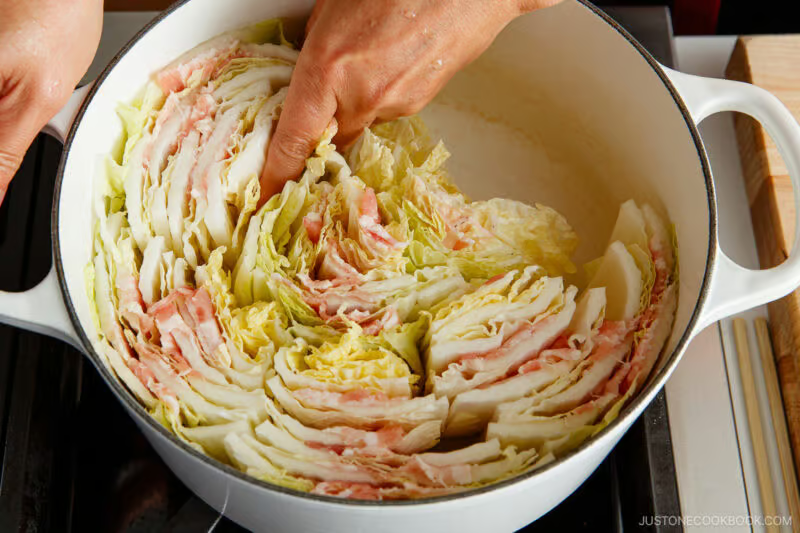
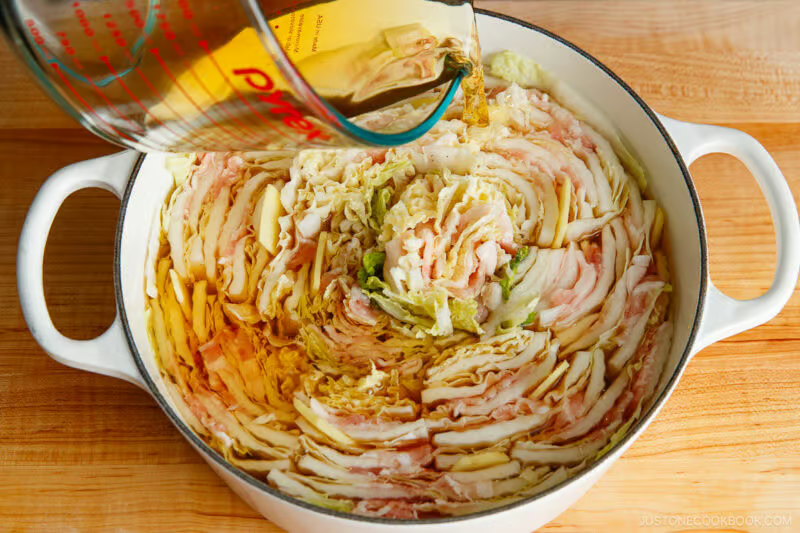
Tightly pack the layered cabbage and pork into a pot, working your way toward the center. Insert the ginger slices between the cabbage and pour the broth on top.
Complete Your Meal
How to Cook Japanese Rice in a Pot on the Stove (Video) 173 30 minutes minutes Japanese Simmered Kabocha かぼちゃの煮物 135 45 minutes minutes Hijiki Seaweed Salad (Video)ひじきの煮物 43 1 hour hour Japanese Cucumber Salad (Sunomono) (Video) 酢の物 152 15
Source video
Source video
Method Timeline
Prep
ActivePrep
15 min
Prep time from the source recipe card.
Cook
ActiveCook
15 min
Cook time from the source recipe card.
Total
PassiveTotal
30 min
Total time from the source recipe card.
Step 1
Before You Start: Make 5 cups dashi (Japanese soup stock) of your choice. Here, I'll show you a quick version using my favorite dashi packet. First, add 2 dashi packets to 5 cups water in a saucepan. Start cooking over medium heat. When it reaches a boil, reduce the heat to medium low and simmer for 2–3 minutes. Turn off the heat. Remove the packets from the saucepan, shake them a few times to release more flavor, then discard them. The dashi is now ready to use.
medium heat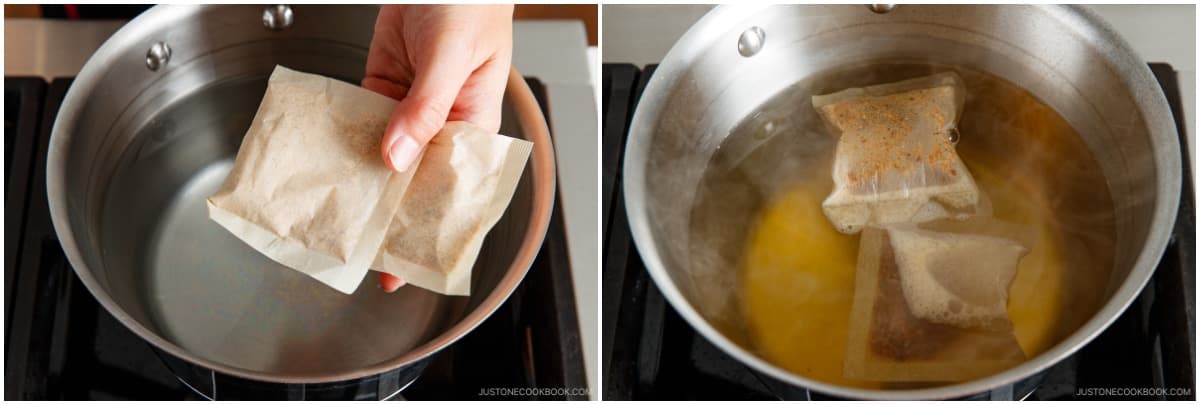
Image detailsBefore You Start: Make 5 cups dashi (Japanese soup stock) of your choice. Here, I'll show you a quick version using my favorite dashi packet. First, add 2 dashi packets to 5 cups water in a saucepan. Start cooking over medium heat. When it reaches a boil, reduce the heat to medium low and simmer for 2–3 minutes. Turn off the heat. Remove the packets from the saucepan, shake them a few times to release more flavor, then discard them. The dashi is now ready to use.Just One Cookbook · Mille-Feuille Nabe ミルフィーユ鍋Dev reference Checks1
TimingInfoTimingfor 2–3 minutes
Target: 2-3 minute
Expected state: When it reaches a boil, reduce the heat to medium low and simmer for 2–3 minutes.
Inputs and tools1
Uses
- 5 cups dashi (Japanese soup stock)
Why and source
This step has reviewed source-backed guidance.
- Source: Mille-Feuille Nabe ミルフィーユ鍋
Step 2
Gather all the ingredients.
Step 3
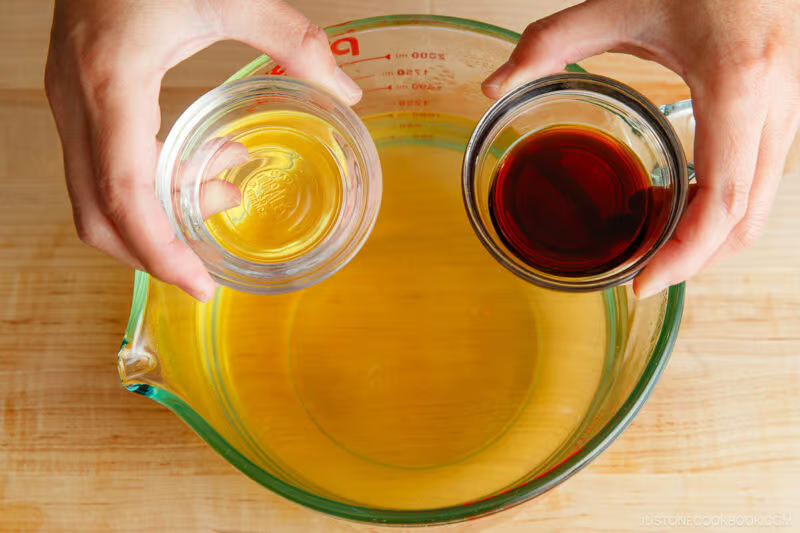
To make the soup broth, combine 5 cups dashi (Japanese soup stock), 2 Tbsp sake, 1 Tbsp soy sauce, and ½ tsp Diamond Crystal kosher salt in a measuring cup or mixing bowl. Tip: Don’t reduce the salt since the napa cabbage will release liquid during cooking and dilute the soup.
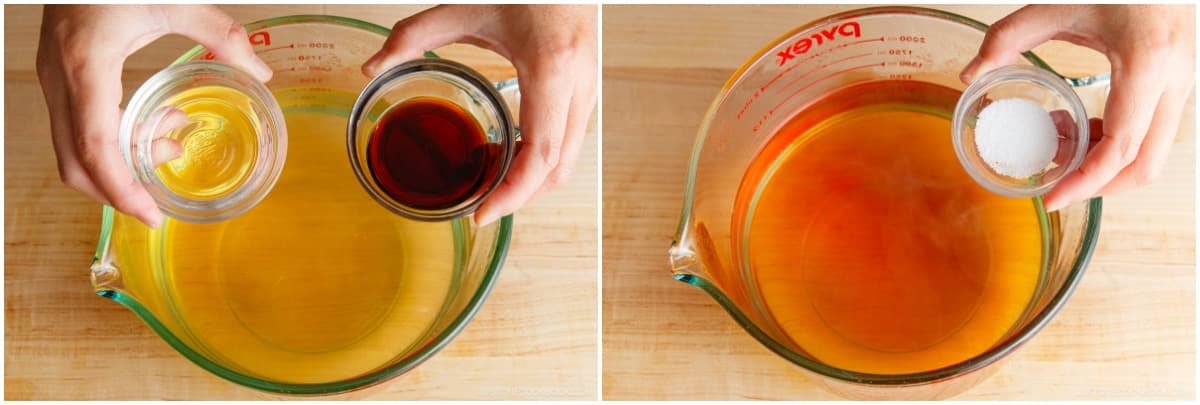
Image detailsTo make the soup broth, combine 5 cups dashi (Japanese soup stock), 2 Tbsp sake, 1 Tbsp soy sauce, and ½ tsp Diamond Crystal kosher salt in a measuring cup or mixing bowl. Tip: Don’t reduce the salt since the napa cabbage will release liquid during cooking and dilute the soup.Just One Cookbook · Mille-Feuille Nabe ミルフィーユ鍋Dev reference Inputs and tools4
Uses
- 1 head napa cabbage ((4 lbs, 1.8 kg))
- 2 Tbsp sake
- 1 Tbsp soy sauce
- ½ tsp Diamond Crystal kosher salt
Step 4
Peel and thinly slice the ginger knob into 8–10 slices ginger and set it aside.
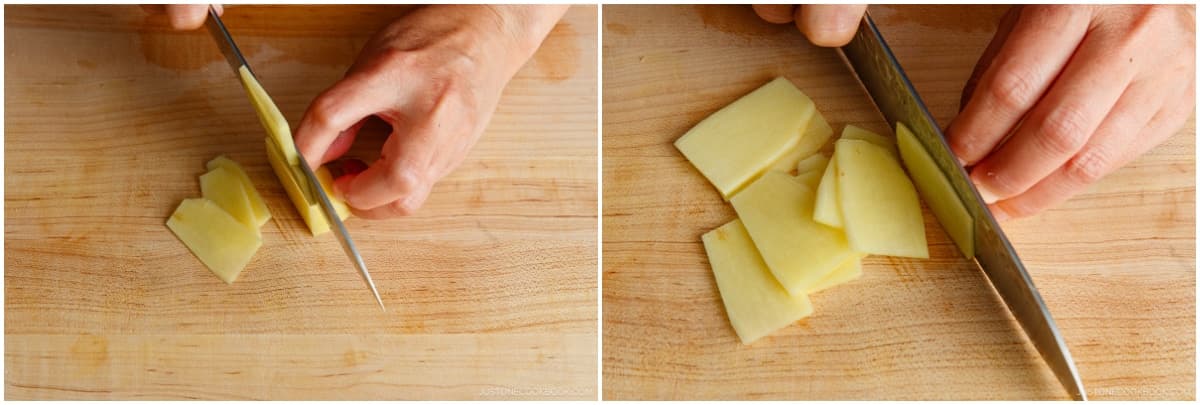
Image detailsPeel and thinly slice the ginger knob into 8–10 slices ginger and set it aside.Just One Cookbook · Mille-Feuille Nabe ミルフィーユ鍋Dev reference Inputs and tools1
Uses
- 8–10 slices ginger ((peeled and thinly sliced from a 1-inch, 2.5-cm knob))
Step 5
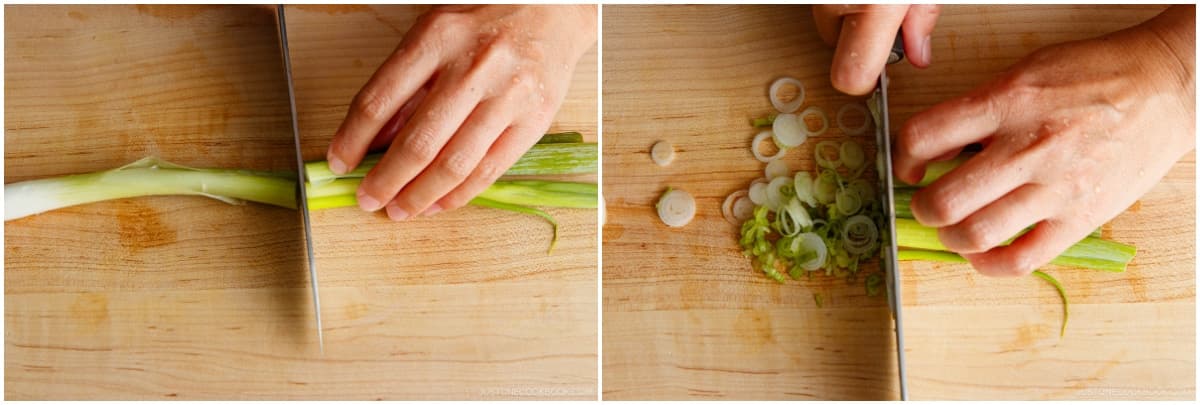
Thinly cut 1 green onion/scallion. Put the green onion in a small serving bowl to add later to the dipping sauce.
Step 6
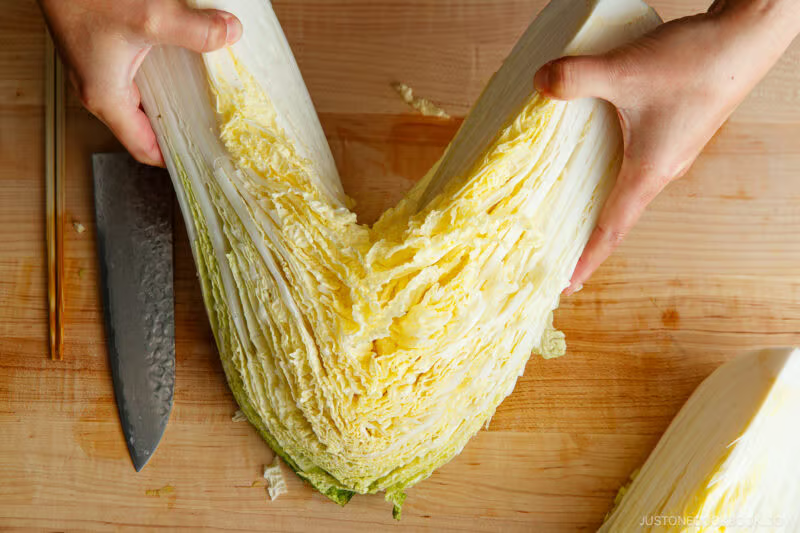
Cut 1 head napa cabbage lengthwise into quarters. I like to cut just the white bottom half with a sharp knife, then pull apart the leafy top half with my hands. By tearing it naturally, you lose fewer leaves compared to slicing. DO NOT cut off the core from the wedges yet. They keep the leaves attached and make layering the pork belly much easier.
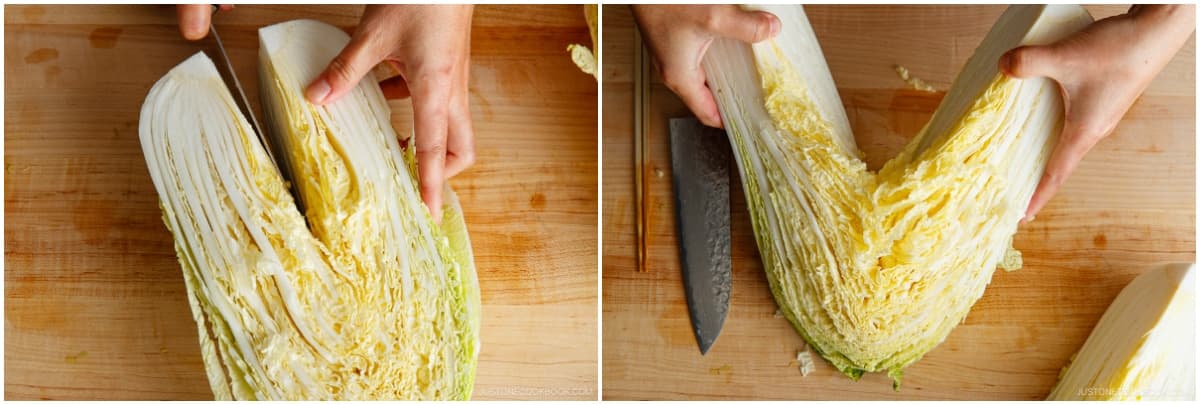
Image detailsCut 1 head napa cabbage lengthwise into quarters. I like to cut just the white bottom half with a sharp knife, then pull apart the leafy top half with my hands. By tearing it naturally, you lose fewer leaves compared to slicing. DO NOT cut off the core from the wedges yet. They keep the leaves attached and make layering the pork belly much easier.Just One Cookbook · Mille-Feuille Nabe ミルフィーユ鍋Dev reference Inputs and tools1
Uses
- 1½ lb sliced pork belly
Step 7
Carefully wash the leaves without detaching them from the core. Drain well. Don’t throw away any leaves that naturally come off while rinsing. We’ll use them later on.
Step 8
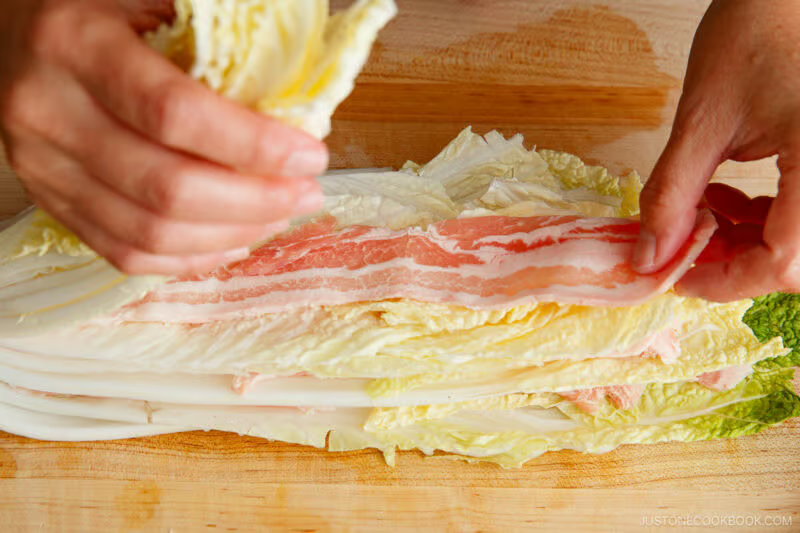
Layer 1½ lb sliced pork belly into the napa cabbage wedges by placing one pork belly slice between each of the leaves. If the pork belly is longer than the cabbage wedge, trim the pork with kitchen shears and layer it in other parts of the wedge. If you have extra pork belly, put an additional slice in the outer layers that have wide leaves.
Step 9
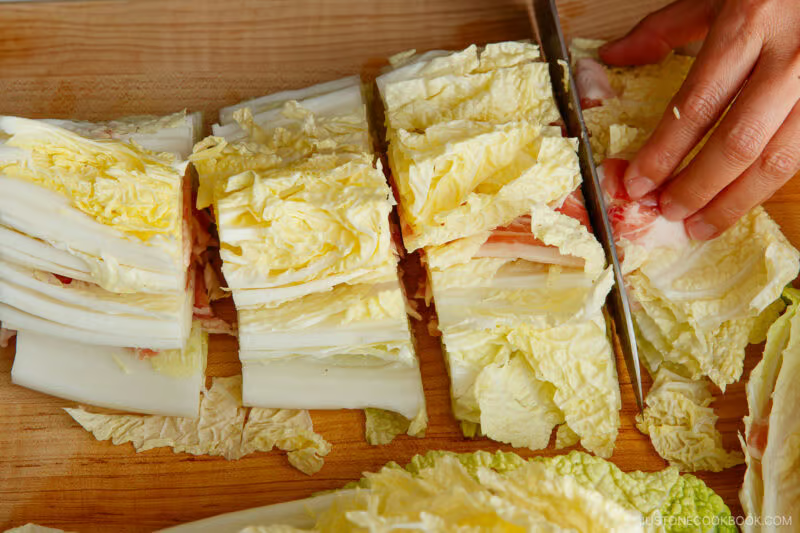
Once you‘ve tucked in the pork belly slices, carefully cut off the hard cabbage cores without disturbing the layers. Cut each wedge into 4 pieces that are each about 2–2½ inches (5–6 cm) long. Keeping the layers of cabbage and pork neatly stacked as you slice.
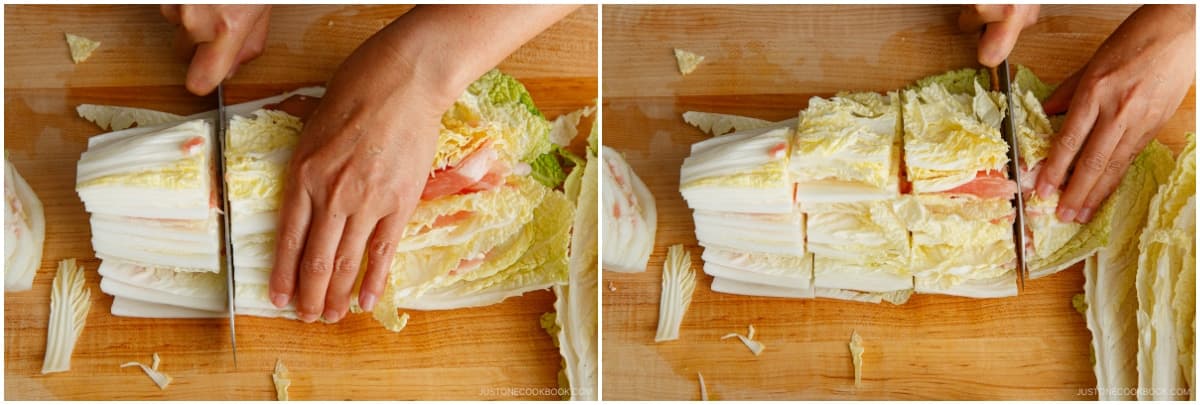
Image detailsOnce you‘ve tucked in the pork belly slices, carefully cut off the hard cabbage cores without disturbing the layers. Cut each wedge into 4 pieces that are each about 2–2½ inches (5–6 cm) long. Keeping the layers of cabbage and pork neatly stacked as you slice.Just One Cookbook · Mille-Feuille Nabe ミルフィーユ鍋Dev reference Visual cue
Once you‘ve tucked in the pork belly slices, carefully cut off the hard cabbage cores without disturbing the layers.
Checks1
Visual cueInfoVisualOnce you‘ve tucked in the pork belly slices, carefully cut off the hard cabbage cores without disturbing the layers.
Expected state: Once you‘ve tucked in the pork belly slices, carefully cut off the hard cabbage cores without disturbing the layers.
Why and source
This step has reviewed source-backed guidance.
- Source: Mille-Feuille Nabe ミルフィーユ鍋
Step 10
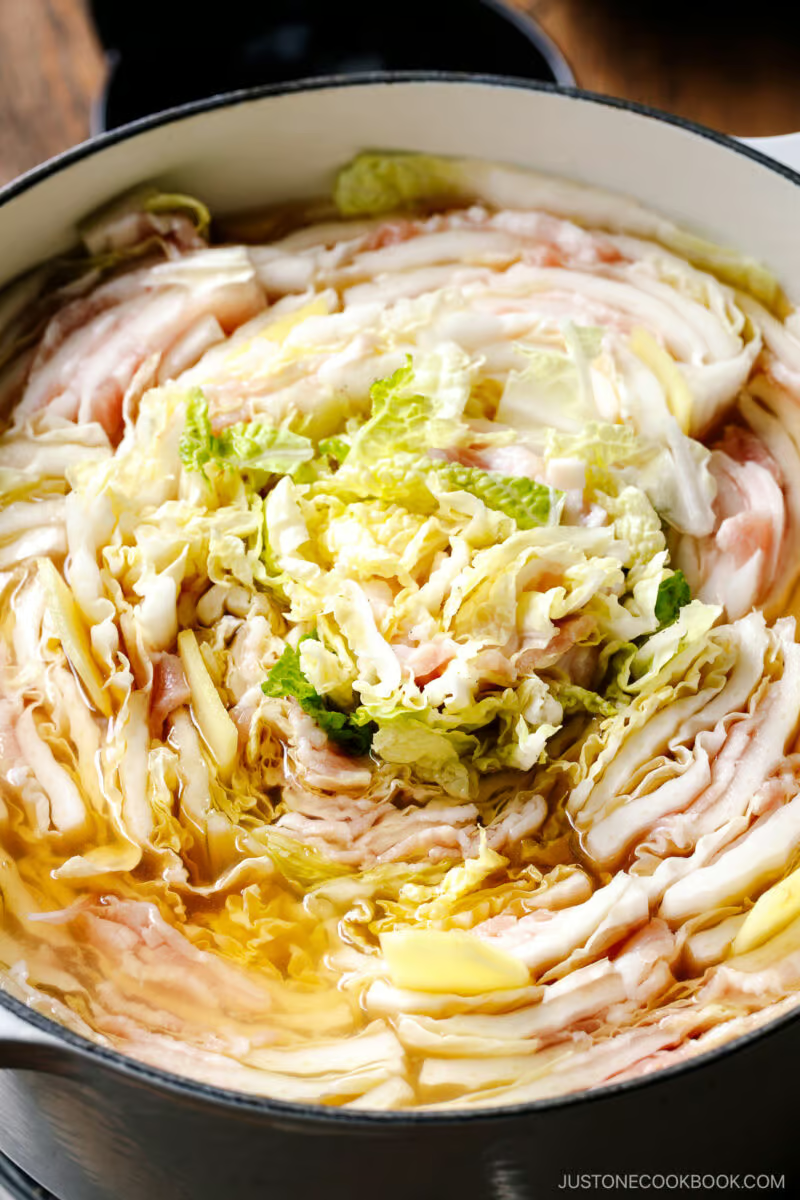
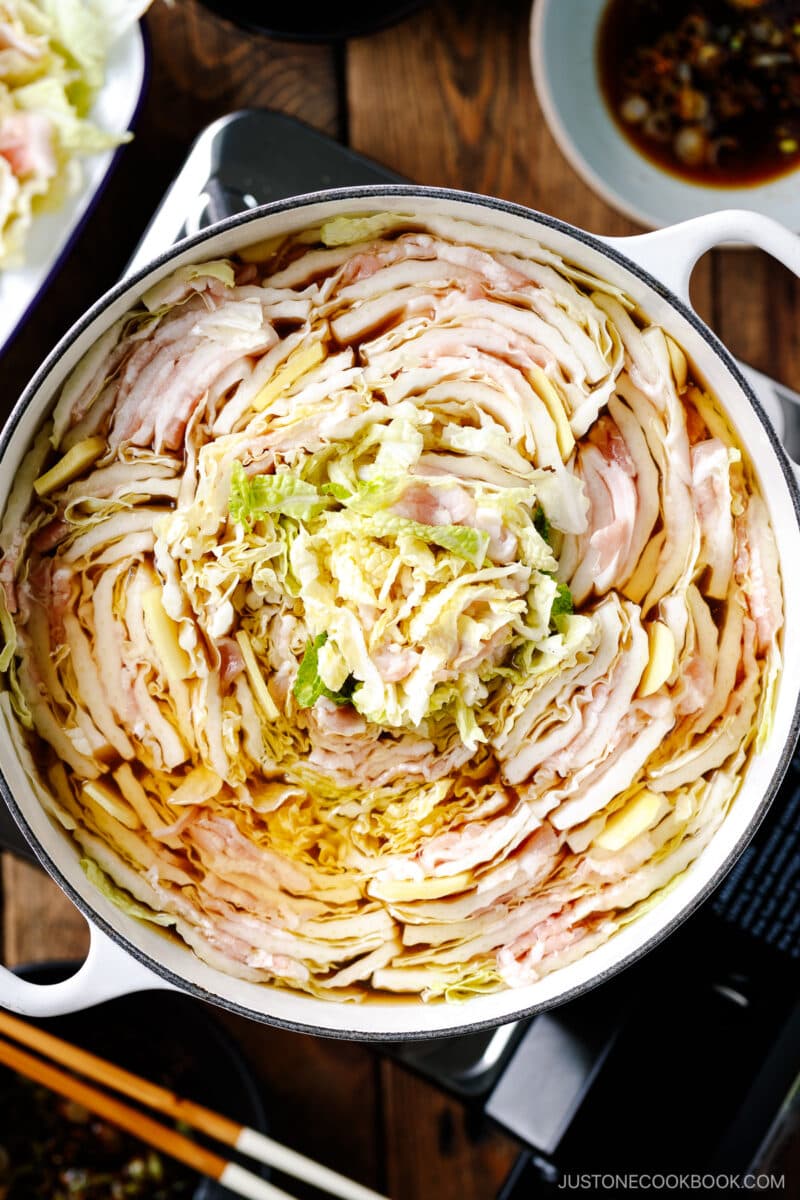
Prepare a donabe or regular 10-inch pot (I used a 4.5 QT Le Creuset pot; if you‘re doubling the recipe, use two 10-inch pots or one larger pot). Begin to pack the ingredients starting from the edge of the pot and working your way toward the center. Turn the stacks on their side so the pink and green layers are visible. Position the layers parallel to the pot‘s side so they eventually form concentric circles in the pot.
Step 11
I usually place the thicker cabbage leaves near the edge of the pot and the tender leaves in the center. Make sure to pack the pot tightly as the layers will become loose during cooking.
Step 12
If you don’t have enough layers to pack the pot tightly, consider using a smaller pot or place other ingredients in the center. Here, I stuffed the napa cabbage leaves that came off when I cut and rinsed the cabbage. You can also put enoki mushrooms or shimeji mushrooms in the center.
Step 13
If you have extra layers, hold them in a deep baking dish or a container with a tall rim. You can add them to the pot later after you‘ve remove most of the cooked layers.
Step 14
Insert the thinly sliced ginger between the layers.
Step 15
Pour the soup broth into the pot with the cabbage and pork layers. If you are cooking at the table, bring the pot to the table. Otherwise, start cooking it on the stove (see below).
Step 16
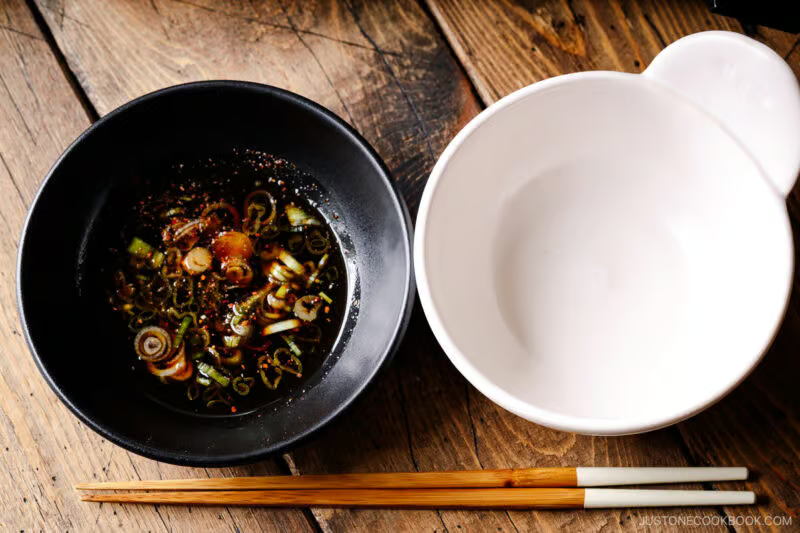
At each place setting, prepare a medium bowl and a small dipping bowl for each person. To cook at the table, set it up a portable gas stove and place the pot on it. For the dipping sauce, add ponzu, the chopped green onion/scallion, and optional shichimi togarashi (Japanese seven spice) to the small bowls.
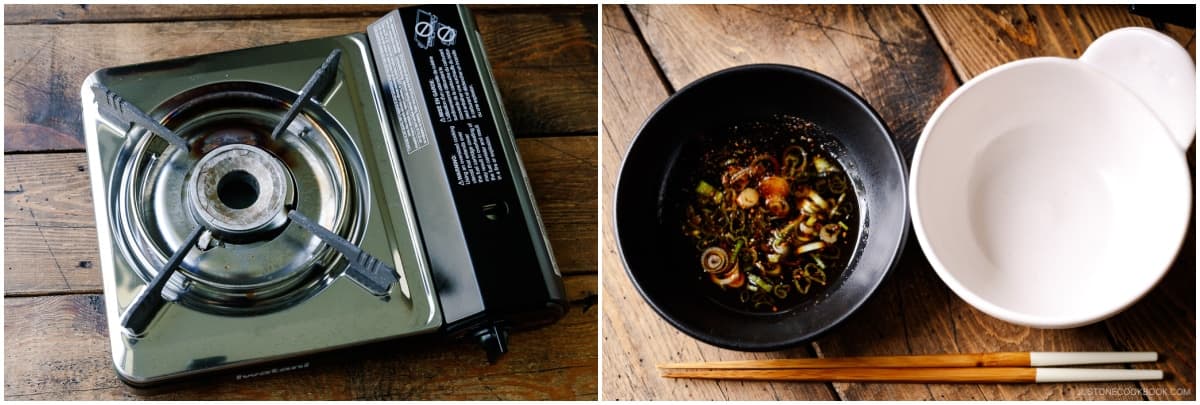
Image detailsAt each place setting, prepare a medium bowl and a small dipping bowl for each person. To cook at the table, set it up a portable gas stove and place the pot on it.For the dipping sauce, add ponzu, the chopped green onion/scallion, and optional shichimi togarashi (Japanese seven spice) to the small bowls.Just One Cookbook · Mille-Feuille Nabe ミルフィーユ鍋Dev reference Inputs and tools2
Uses
- ponzu
- shichimi togarashi (Japanese seven spice) ((optional, for a spicy kick))
Step 17
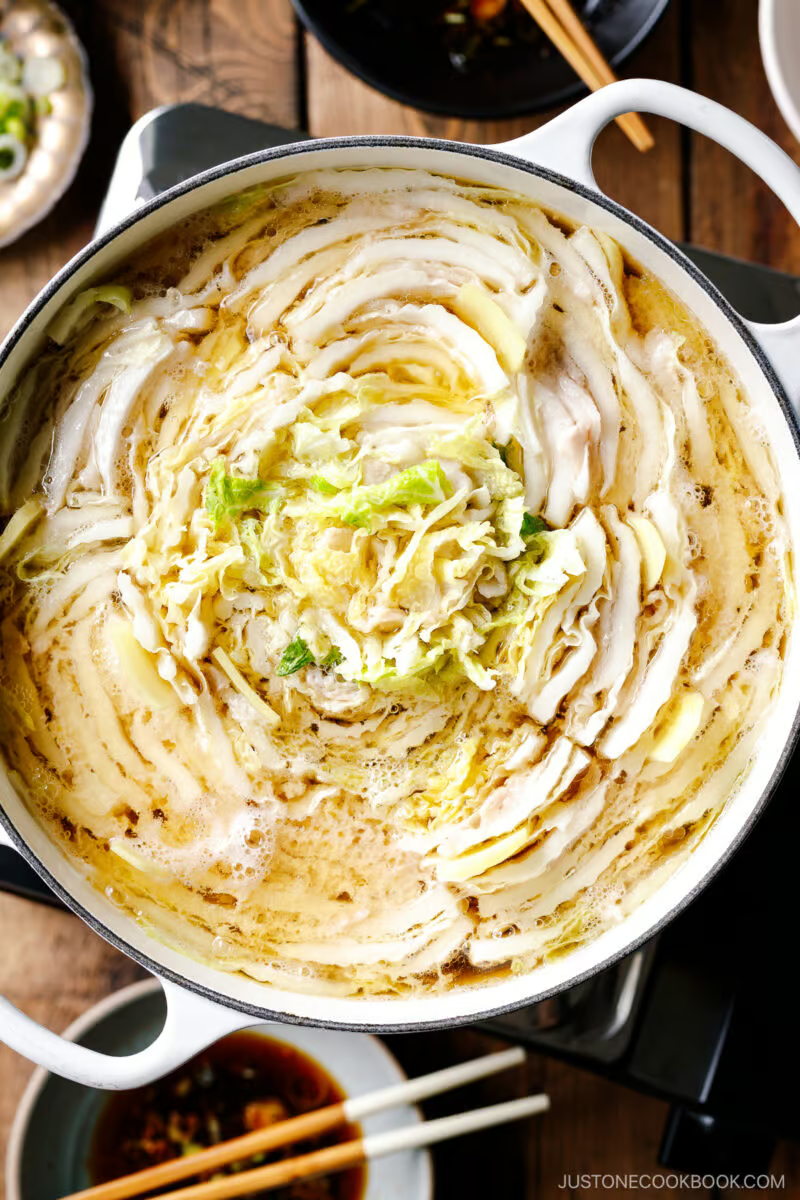
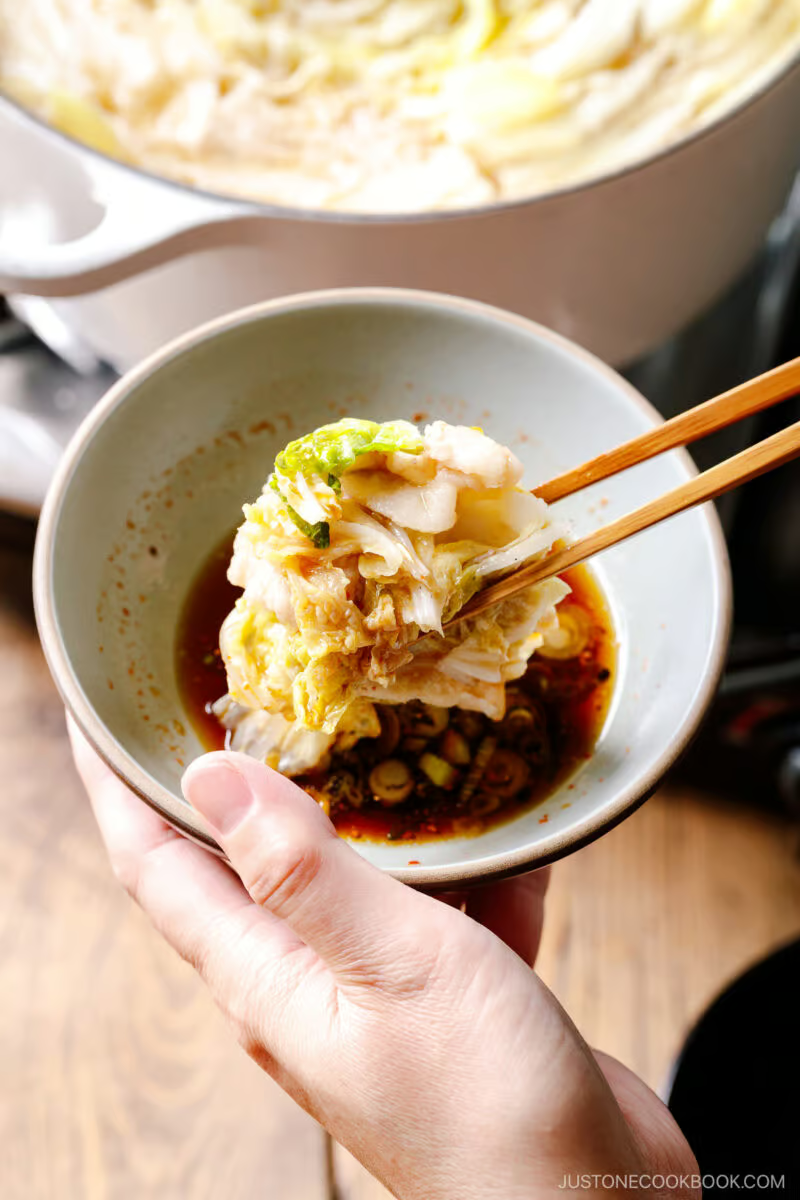
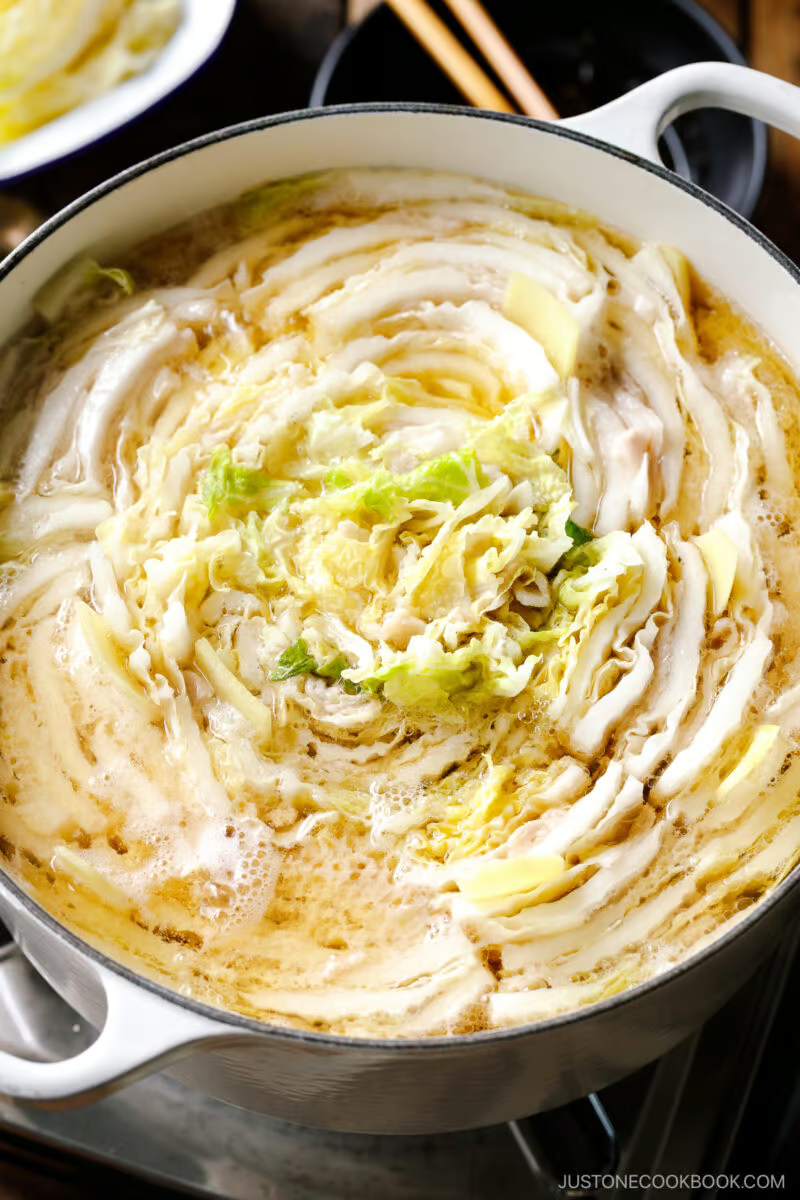
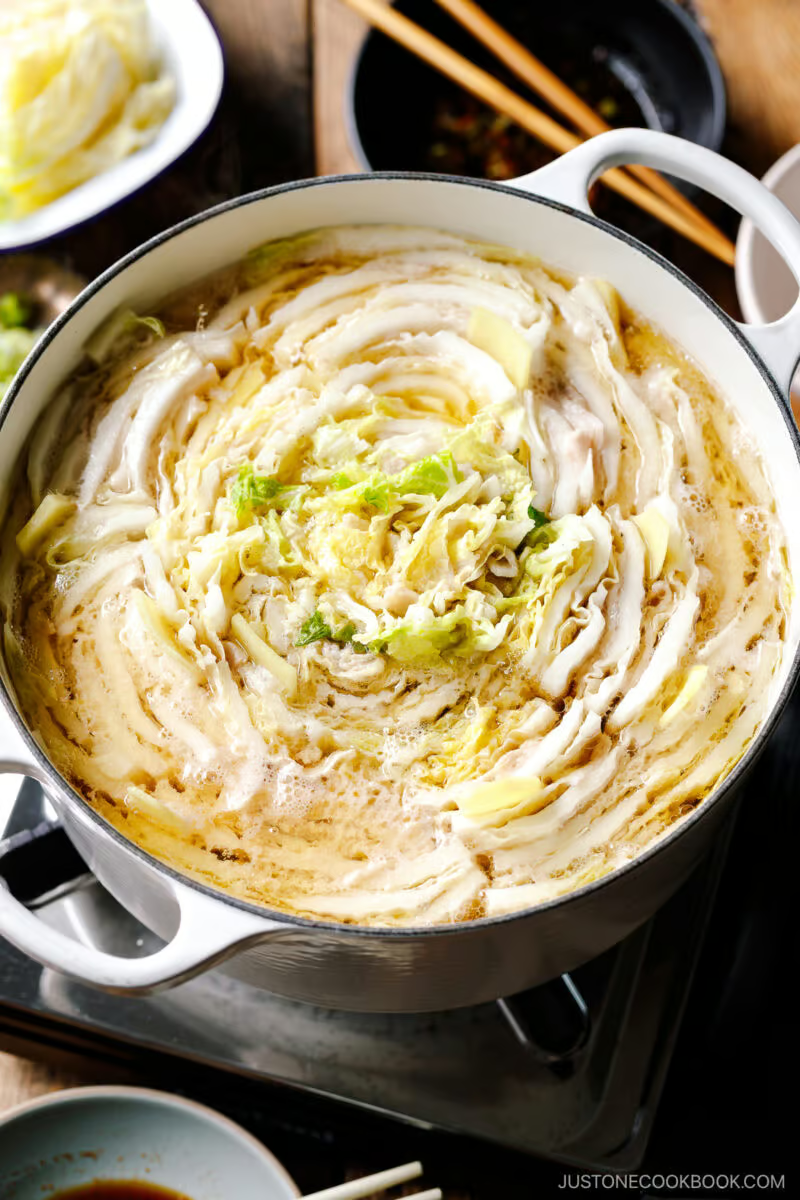
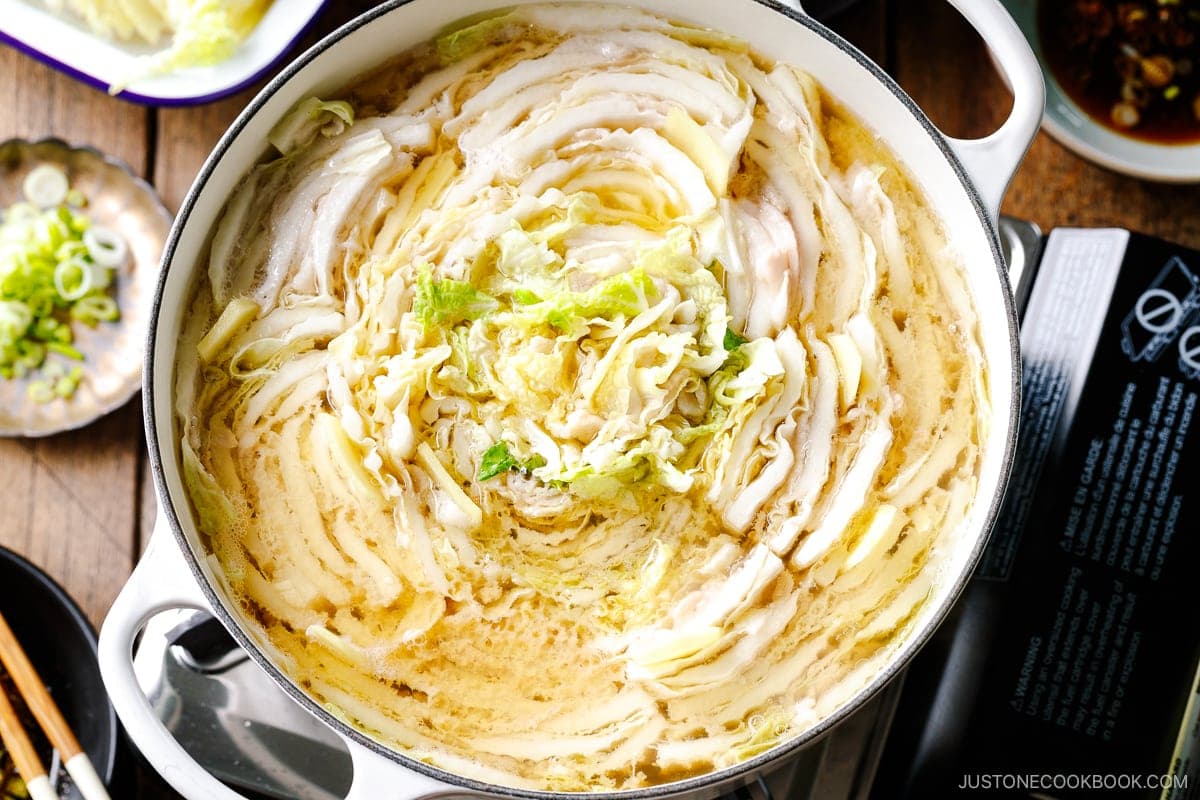
Start cooking, covered, on medium-high heat. Once boiling, skim off the scum and fat on the surface using a fine-mesh skimmer. Then, reduce the heat to medium low and cook covered until the napa cabbage is tender and the pork belly is cooked through, roughly 8–10 minutes. Serve it hot dipped in ponzu sauce and enjoy!
medium-high heat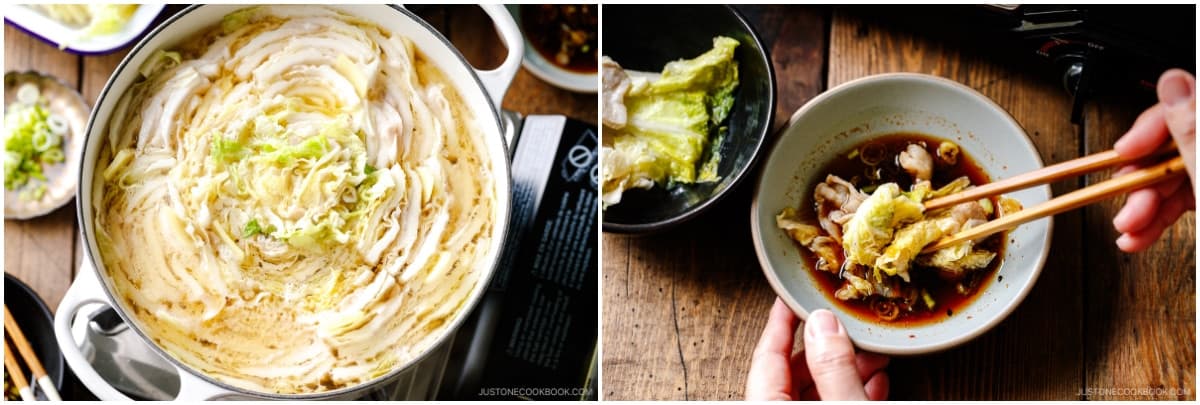
Image detailsStart cooking, covered, on medium-high heat. Once boiling, skim off the scum and fat on the surface using a fine-mesh skimmer. Then, reduce the heat to medium low and cook covered until the napa cabbage is tender and the pork belly is cooked through, roughly 8–10 minutes. Serve it hot dipped in ponzu sauce and enjoy!Just One Cookbook · Mille-Feuille Nabe ミルフィーユ鍋Dev reference Visual cue
Once boiling, skim off the scum and fat on the surface using a fine-mesh skimmer.
Checks3
Visual cueInfoVisualOnce boiling, skim off the scum and fat on the surface using a fine-mesh skimmer.
Expected state: Once boiling, skim off the scum and fat on the surface using a fine-mesh skimmer.
TimingInfoTiming8–10 minutes
Target: 8-10 minute
Expected state: Then, reduce the heat to medium low and cook covered until the napa cabbage is tender and the pork belly is cooked through, roughly 8–10 minutes.
ServiceMain recipeSource service instruction
Start cooking, covered, on medium-high heat. Once boiling, skim off the scum and fat on the surface using a fine-mesh skimmer. Then, reduce the heat to medium low and cook covered until the napa cabbage is tender and the pork belly is cooked through, roughly 8–10 minutes. Serve it hot dipped in ponzu sauce and enjoy!
medium-high heatWhy and source
This step has reviewed source-backed guidance.
- Source: Mille-Feuille Nabe ミルフィーユ鍋
Step 18
You can keep the leftovers in an airtight container and store in the refrigerator for up to 3 days or in the freezer for a month.
Handling and Storage
Reviewed hold, storage, make-ahead, and service-timing guidance.
Cooking
Cover the lid and bring to a boil.
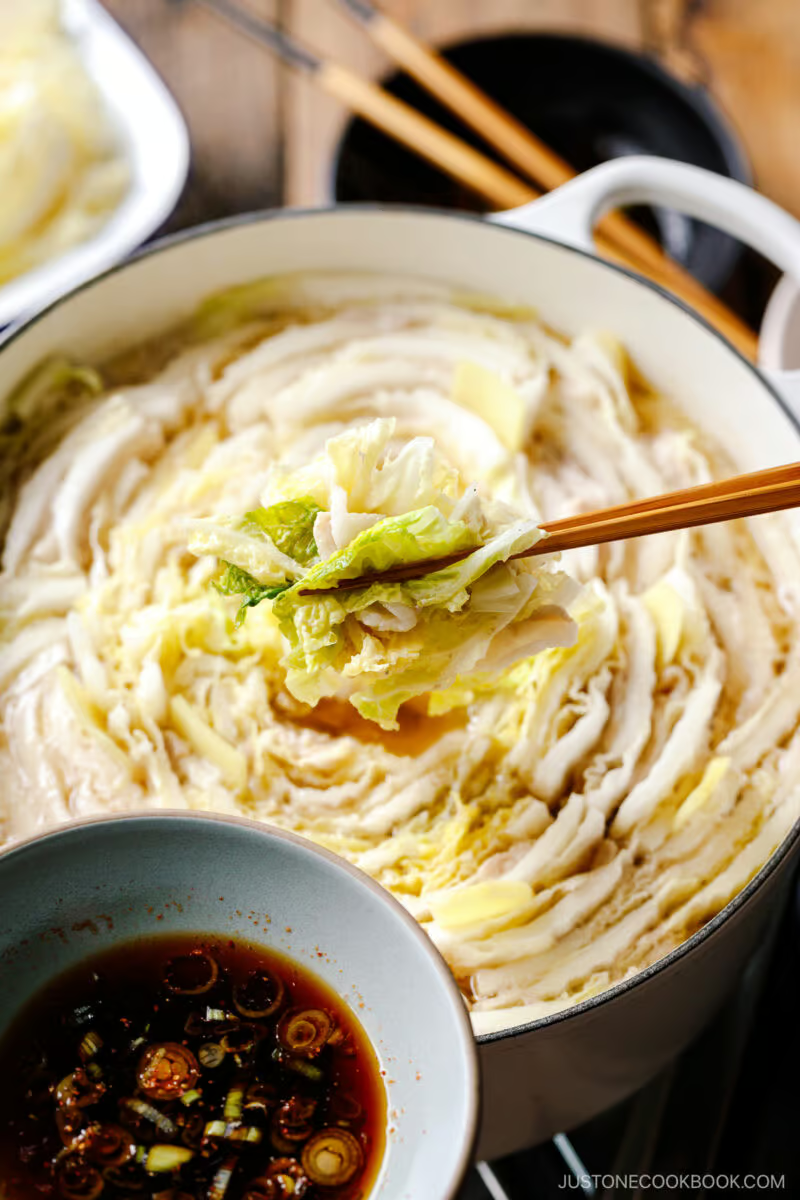
Then, reduce to medium-high heat and simmer until the cabbage is tender and the pork is fully cooked. Meanwhile, make the dipping sauce by combining the sauce ingredients in a mixing bowl.
Nami’s Recipe Tips
Running out of cabbage?
It can happen, especially if this is your first time making this dish. I recommend having shimeji mushrooms or enoki mushrooms as a backup filler for any empty space in the center of the pot.
Variations and Customizations
Some of our readers use Vegan Dashi and mushrooms or thinly sliced vegetables instead of pork belly, and they love it!
Napa cabbage is the traditional choice, but you can add other thinly sliced veggies. Make a finishing course.
What to Serve with Mille-Feuille Nabe
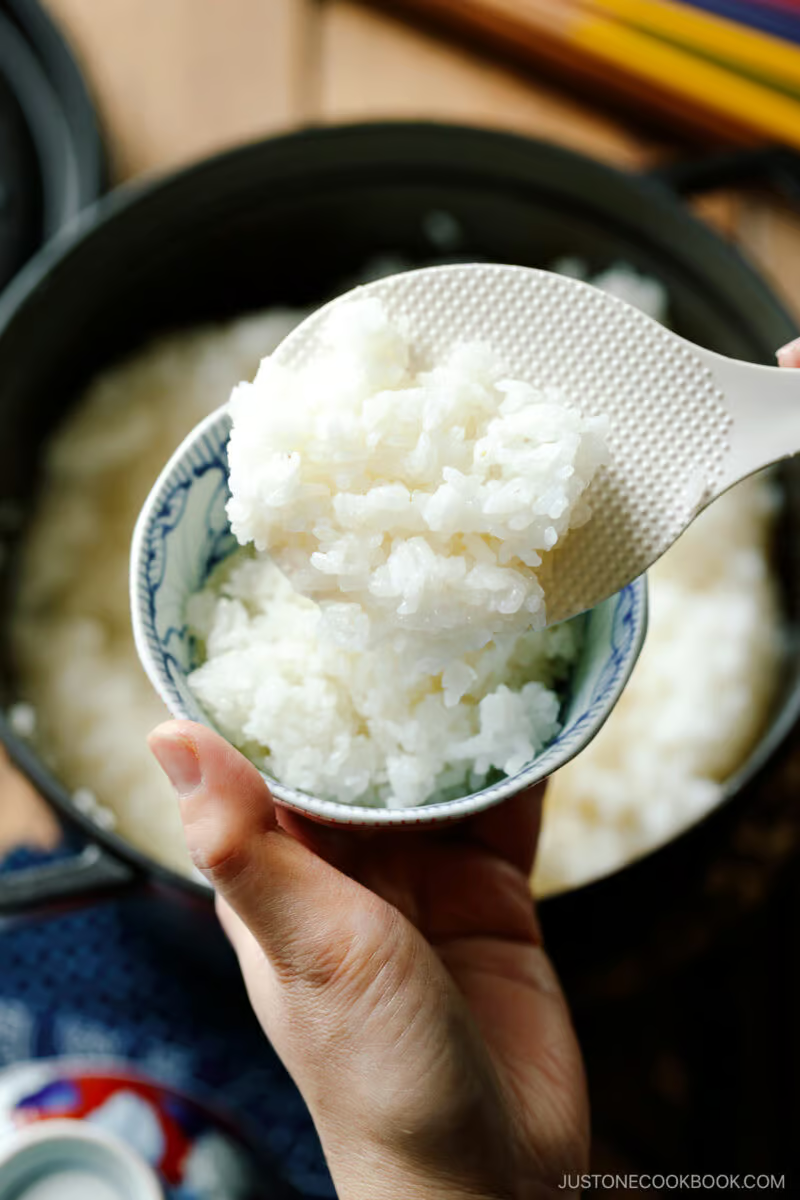
Rice – Learn How to Cook Japanese Rice in a Pot on the Stove.
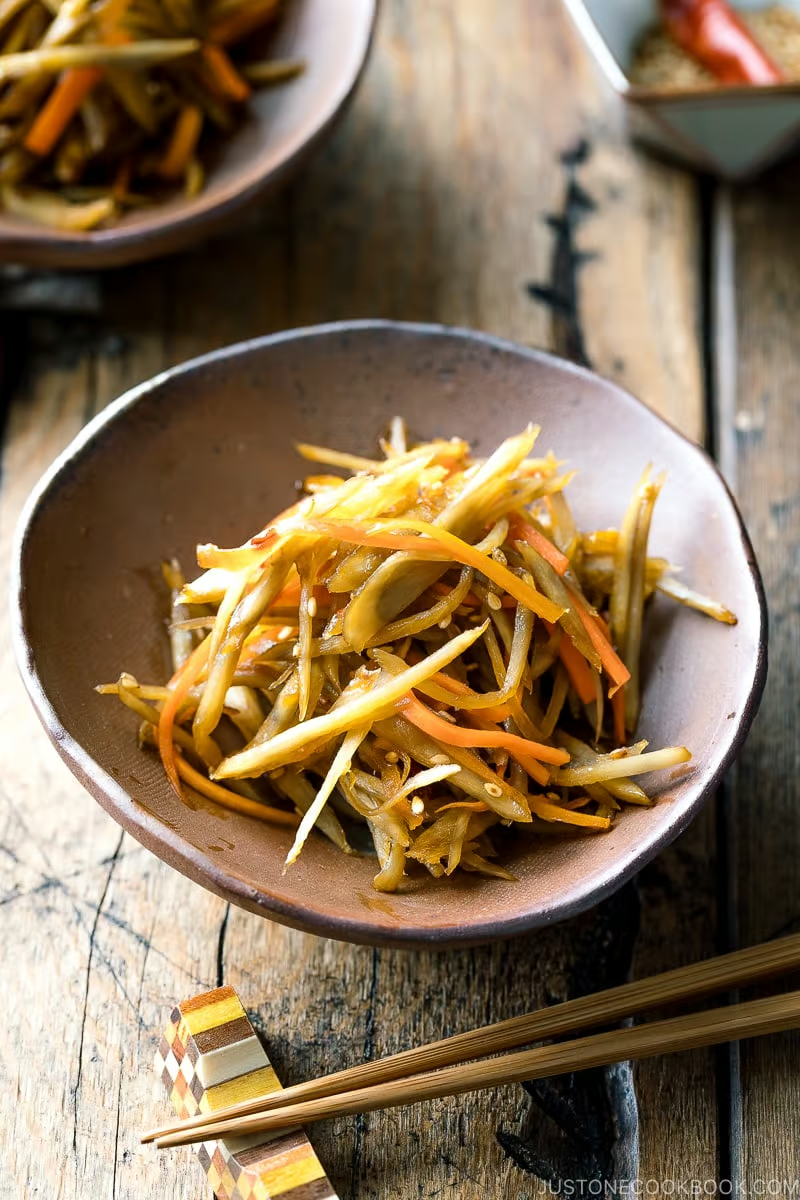
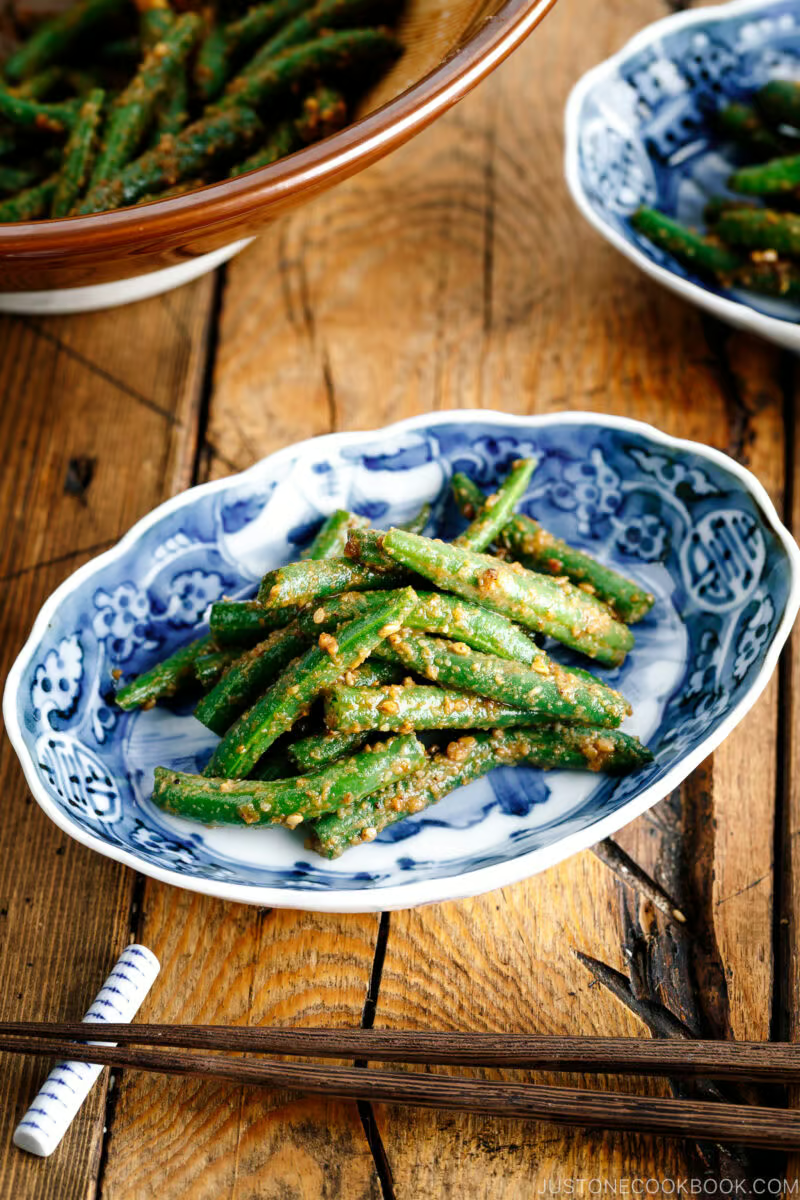
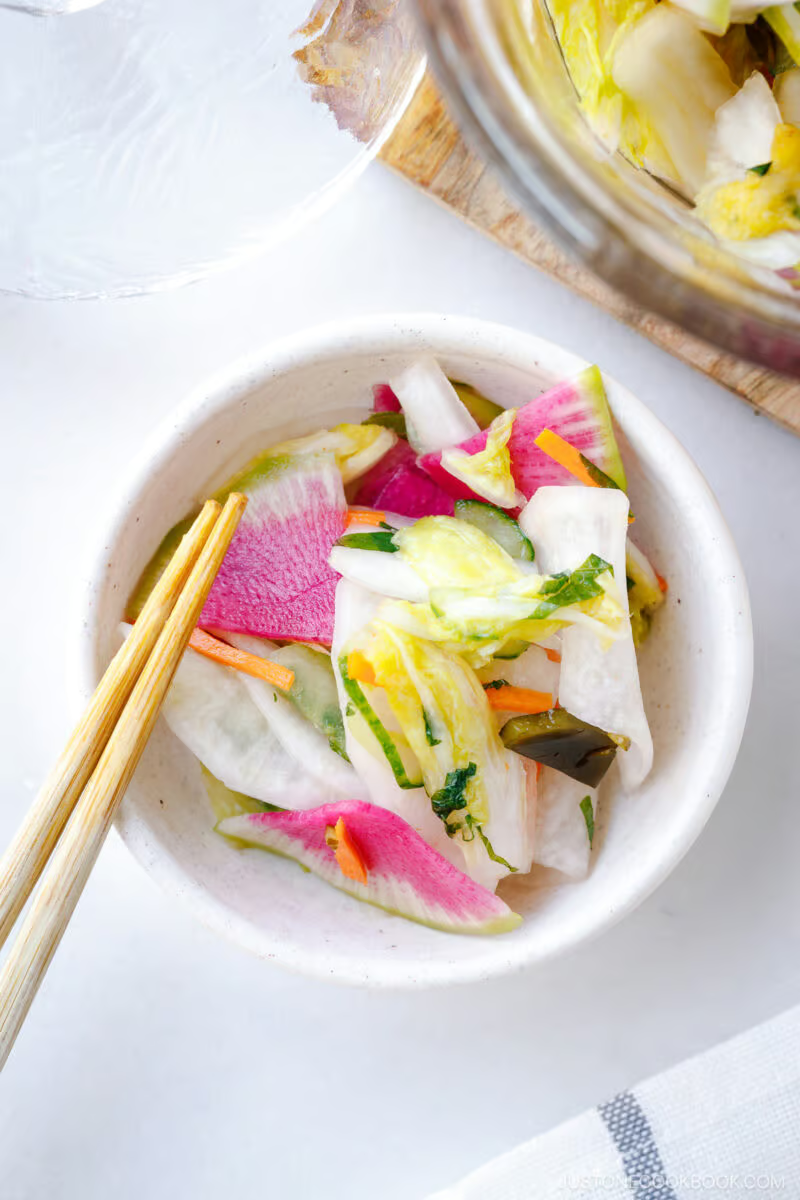
Sides – Try Kinpira Gobo, Green Bean Gomaae, and Asazuke (Japanese Lightly Pickled Vegetables). Make them ahead of time.
Show 1 more media item
Storage and Reheating Tips
To store: Allow the nabe to cool uncovered, then store in an airtight container for up to 3 days in the fridge or up to 1 month in the freezer.
To reheat: Simmer leftovers in a saucepan over medium heat until warm, or microwave in 30-second intervals.
Can I make mille-feuille nabe in advance?
Yes, you can prepare and assemble everything ahead of time and store it in the refrigerator.
Hold off on adding the broth and cooking the cabbage until right before you’re ready to serve.
Learn More
Extra cooking notes, tests, and source details kept out of the step-by-step method.
Why this works
Quick kitchen reasons behind the main choices.
For the Broth
8–10 slices ginger (peeled and thinly sliced from a 1-inch, 2.5-cm knob) 5 cups dashi (Japanese soup stock) (use standard Awase Dashi, dashi packet or powder, or Vegan Dashi) 2 Tbsp sake 1 Tbsp soy sauce ½ tsp Diamond Crystal kosher salt.
For the Dipping Sauce
1 green onion/scallion ponzu shichimi togarashi (Japanese seven spice) (optional, for a spicy kick).
Article photos
Photos used with the article notes.

Source: Mille-Feuille Nabe ミルフィーユ鍋
Recipe structure
Components and intermediate outputs created by the method.
Main recipe
Recipe card ingredients and steps.
4
Sauce
Source step 3 creates or uses sauce.
Extra useful notes
Short source-backed recommendations and facts that do not need a step.
You can purchase pork belly slices or blocks at Asian grocery stores (especially Japanese, Korean, and Chinese markets).
You can purchase pork belly slices or blocks at Asian grocery stores (especially Japanese, Korean, and Chinese markets). Some American grocery stores with a good meat section (where butchers work behind the counter) carry pork belly, but usually, they keep it in the freezer so you have to ask for it. If your pork belly has skin/rind, you will have to ask the butcher to remove it.
More source notes
Useful article notes that do not need to interrupt the cooking method.
Notes
You can purchase pork belly slices or blocks at Asian grocery stores (especially Japanese, Korean, and Chinese markets).
Some American grocery stores with a good meat section (where butchers work behind the counter) carry pork belly, but usually, they keep it in the freezer so you have to ask for it. If your pork belly has skin/rind, you will have to ask the butcher to remove it.
Recipe Utilities
Account actions, source details, export, and reporting stay available without interrupting the cooking flow.
Source and Origin
Origin declaration
Adapted from source
Imported from the just-one-cookbook page for dev review.
Copy risk: Unchecked
Mille-Feuille Nabe ミルフィーユ鍋
Article
View source
My Kitchen Actions
Login is required.
My Kitchen keeps saved recipes, private notes, adaptations, cooking logs, imports, and exports tied to your account.
Export
Public recipe exports include only approved public content. Personal backup exports require login.
Export history
No exports yet.