Dashimaki Tamago (Japanese Dashi Rolled Omelette)
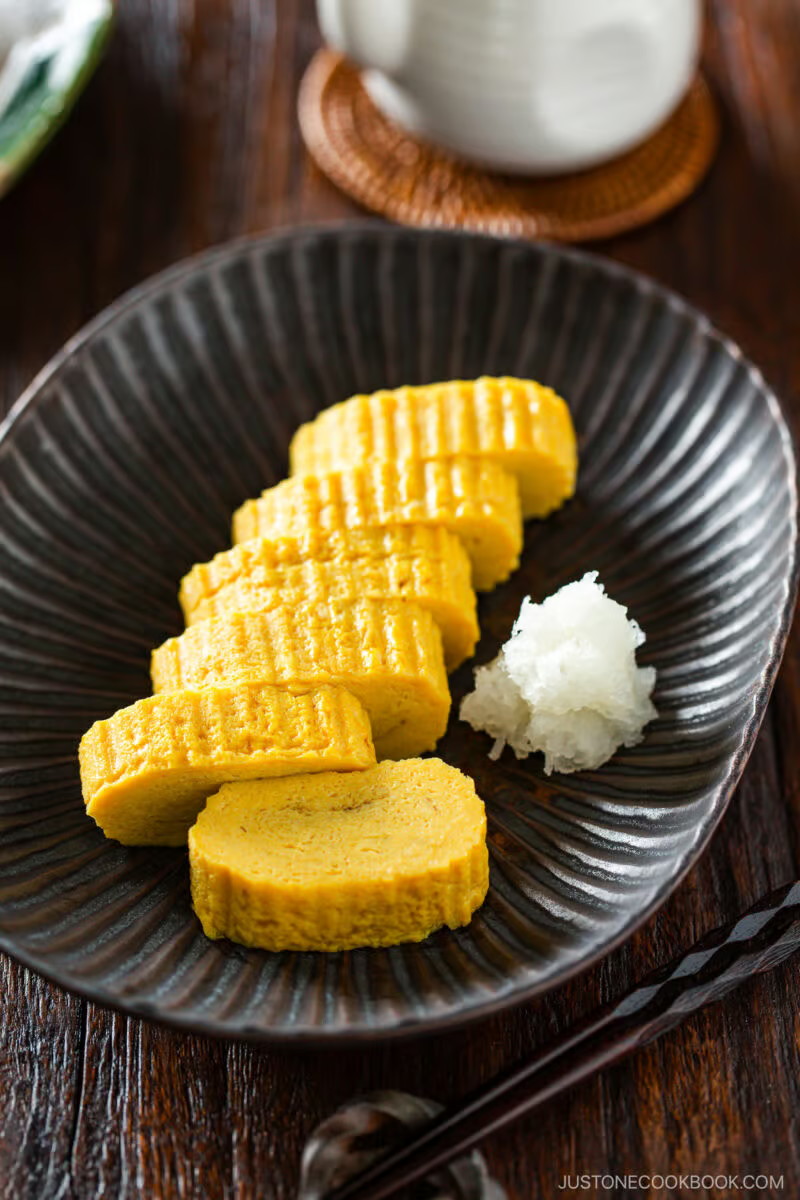
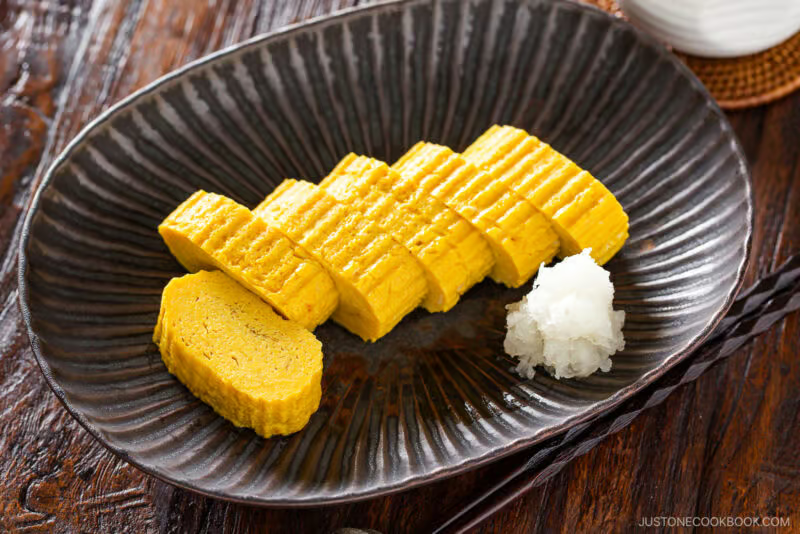
Make this soft, juicy Tamagoyaki (Japanese rolled omelette) recipe at home using dashi soup stock. Follow my step-by-step tips to roll it beautifully every time.
Dish: Dashimaki Tamago
Variant: Dashimaki Tamago (Japanese Dashi Rolled Omelette)
Source: Dashimaki Tamago (Japanese Dashi Rolled Omelette) だし巻き玉子
- Total time
- 10 min
- Active time
- 5 min
- Yield
- 2
- Difficulty
- Medium
Ingredients and Constraints
Ingredients
Ingredient watchpoints
Short requirements and tradeoffs to check while gathering ingredients; detailed source notes stay expandable.
Additional ingredient notes
Ingredients for Japanese Dashi Rolled Omelette
large eggs dashi (Japanese soup stock) – see below sugar, soy sauce, mirin, and salt neutral oil – for cooking daikon radish and soy sauce – optional, for garnish Find the printable recipe with measurements below.
JUMP TO RECIPE Dashi Types Kombu and Bonito Dashi or Vegan Dashi (20 minutes) – Classic homemade dashi; most flavorful option. Dashi Packet (3 minutes) – Easy and flavorful; my everyday choice!
Ingredients US CUSTOMARY METRIC 1X 2X 3X
3 large eggs (50 g each w/o shell) 3 Tbsp dashi (Japanese soup stock) (use standard Awase Dashi or Vegan Dashi; or make quick dashi with water and a dashi packet or dashi powder) 2 tsp sugar 1 tsp soy sauce (use GF soy sauce for gluten-free
Notes
Variations and Customizations Plain and simple.
Skip the dashi for a firmer, easier omelette. Try my 3-Ingredient Simple Tamagoyaki.
Method Overview
Structured method notes that are separate from the step timeline.
Recipe Highlights
Walk into any izakaya in Japan, and you’ll likely spot housemade tamagoyaki on the menu—and it’s almost always Dashimaki Tamago.
Soft, custardy, savory, and slightly sweet, it’s my all-time favorite version of Japanese rolled omelette. This recipe takes a bit of practice, but I’ll guide you through every step so you can make it at home in no time.
How to Make Dashimaki Tamago
Prepare the egg mixture.
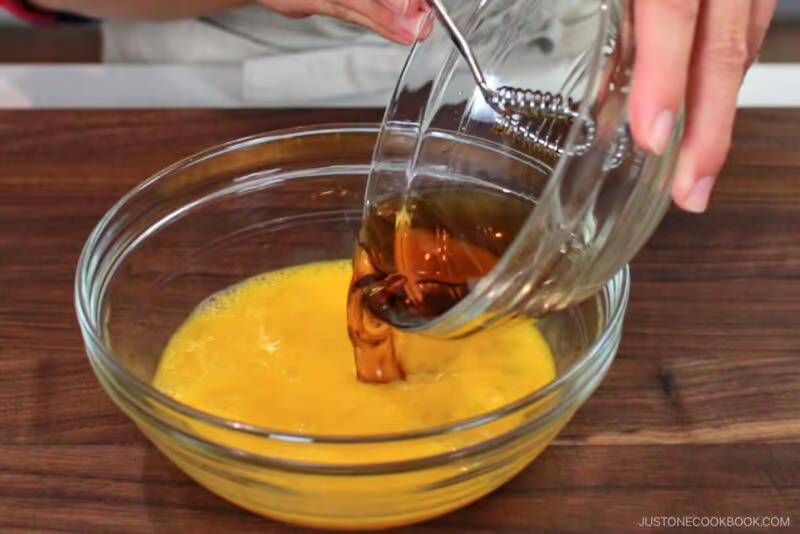
Whisk the eggs gently without overmixing. Combine with dashi, sugar, soy sauce, mirin, and salt until the sugar dissolves and the color is uniform.
Show 2 more media items
Nami’s Recipe Tips
These simple tips will help you make Dashimaki Tamago perfectly every time.
Dashi ratio – You can use up to 100 ml of dashi for 3 eggs for a more pronounced flavor, but more moisture makes rolling significantly harder. Start with less and work your way up as you practice.
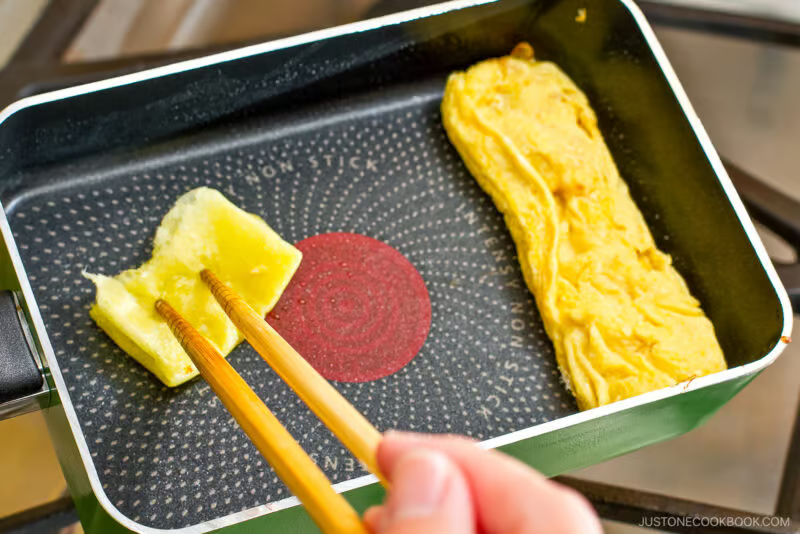
Source video
Source video
Method Timeline
Prep
ActivePrep
5 min
Prep time from the source recipe card.
Cook
ActiveCook
5 min
Cook time from the source recipe card.
Total
PassiveTotal
10 min
Total time from the source recipe card.
Step 1
Tamagoyaki with dashi is the most challenging to roll as the egg mixture is watery. If you're a beginner, practice first with my 3-Ingredient Simple Tamagoyaki recipe. Gather all the ingredients.
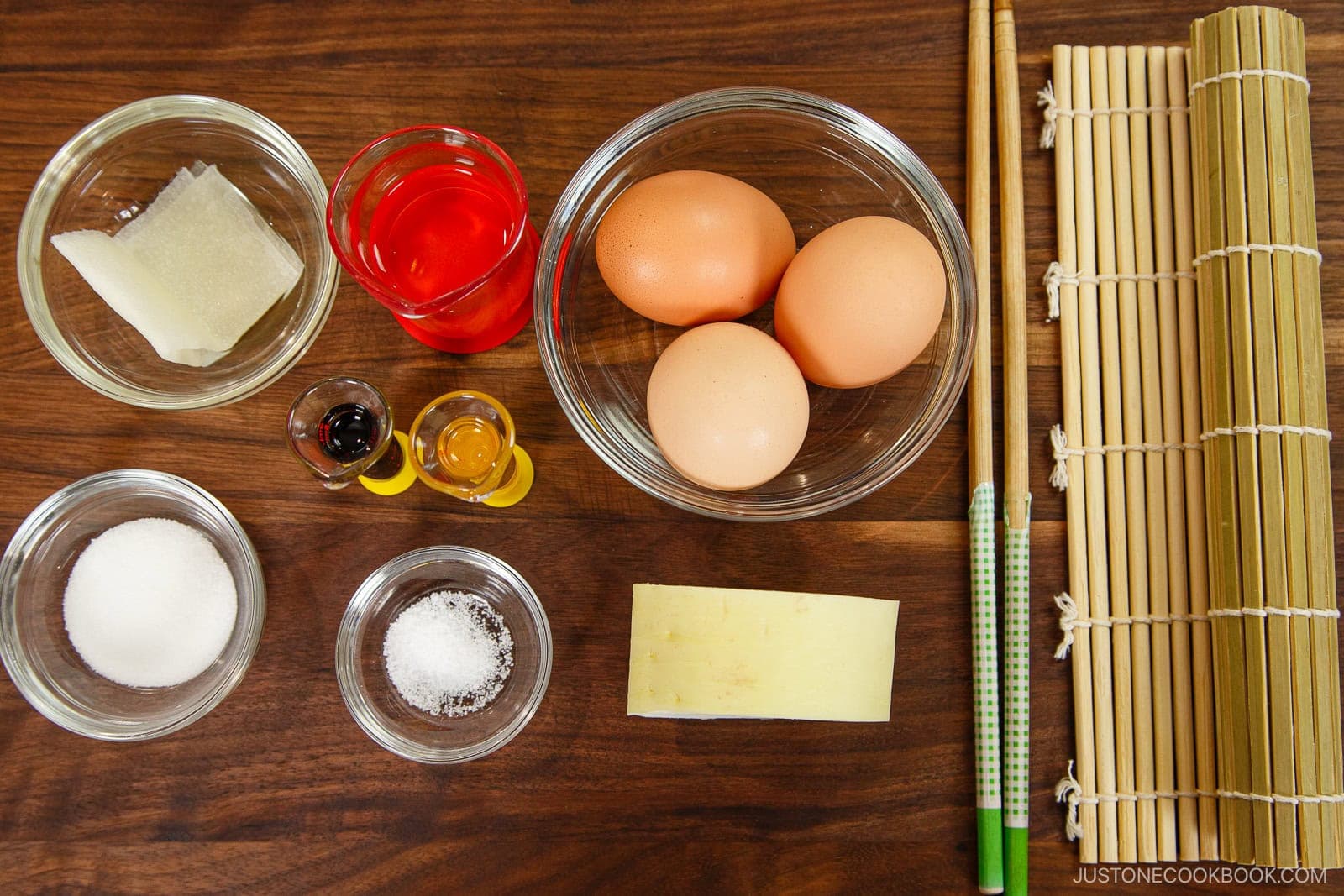
Image detailsTamagoyaki with dashi is the most challenging to roll as the egg mixture is watery. If you're a beginner, practice first with my 3-Ingredient Simple Tamagoyaki recipe.Gather all the ingredients.Just One Cookbook · Dashimaki Tamago (Japanese Dashi Rolled Omelette) だし巻き玉子Dev reference Inputs and tools1
Uses
- 3 Tbsp dashi (Japanese soup stock)
Step 2
Crack 3 large eggs (50 g each w/o shell) into a bowl. Whisk by "cutting" through the eggs with chopsticks in a zig-zag motion, taking care not to overmix.
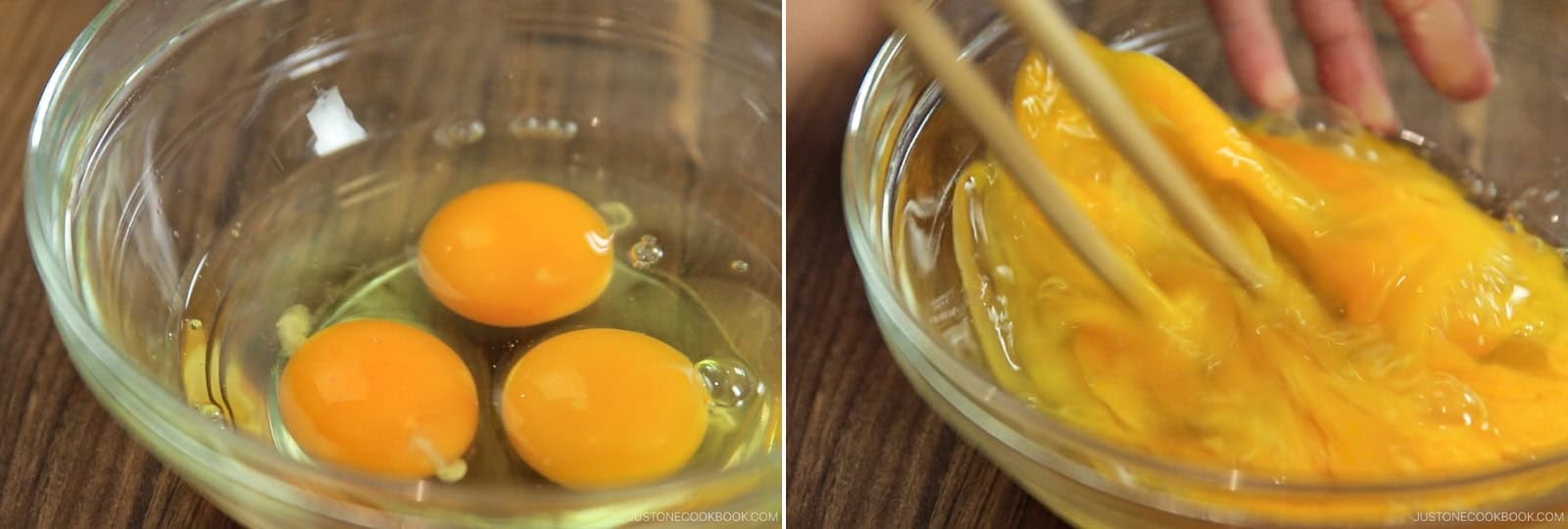
Image detailsCrack 3 large eggs (50 g each w/o shell) into a bowl. Whisk by "cutting" through the eggs with chopsticks in a zig-zag motion, taking care not to overmix.Just One Cookbook · Dashimaki Tamago (Japanese Dashi Rolled Omelette) だし巻き玉子Dev reference Inputs and tools1
Uses
- 3 large eggs (50 g each w/o shell)
Step 3
Combine the seasonings in another bowl: 3 Tbsp dashi (Japanese soup stock), 2 tsp sugar, 1 tsp soy sauce, 1 tsp mirin, and 2 pinches Diamond Crystal kosher salt. Mix well.
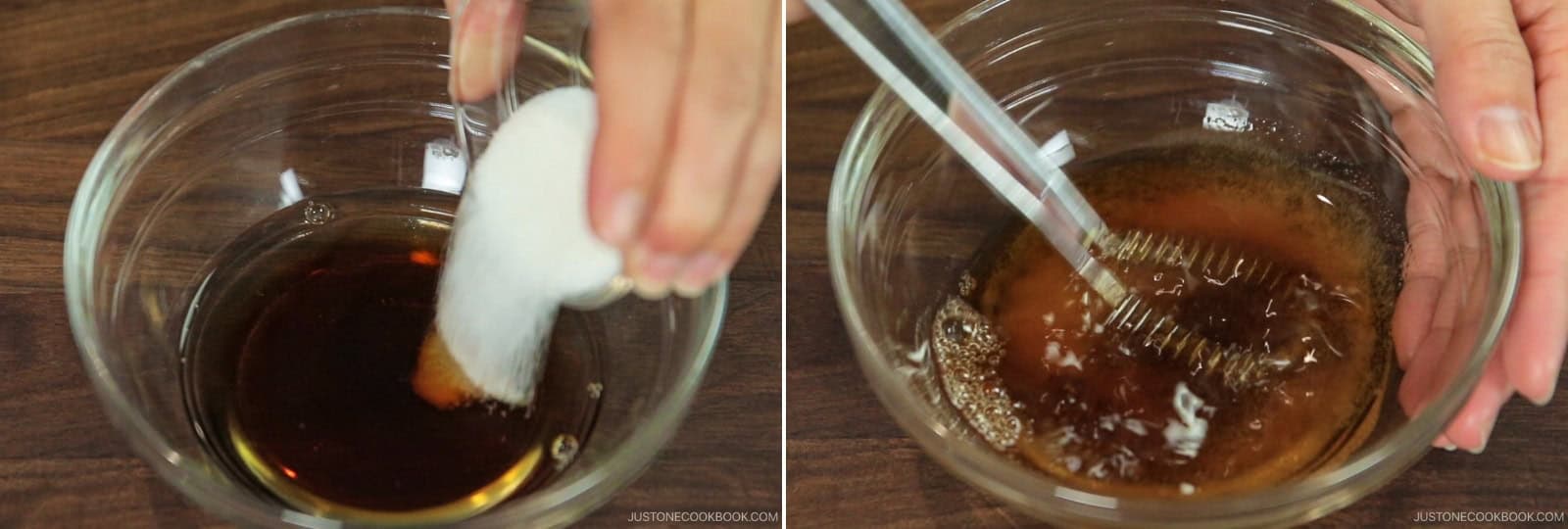
Image detailsCombine the seasonings in another bowl: 3 Tbsp dashi (Japanese soup stock), 2 tsp sugar, 1 tsp soy sauce, 1 tsp mirin, and 2 pinches Diamond Crystal kosher salt. Mix well.Just One Cookbook · Dashimaki Tamago (Japanese Dashi Rolled Omelette) だし巻き玉子Dev reference Inputs and tools4
Uses
- 2 tsp sugar
- 1 tsp soy sauce ((use GF soy sauce for gluten-free))
- 1 tsp mirin
- 2 pinches Diamond Crystal kosher salt
Step 4
Add the seasonings to the eggs and whisk to combine. Don't overmix. Transfer the mixture to a measuring cup with a spout.
Step 5
Heat the pan over medium heat. Dip a folded paper towel in 2 Tbsp neutral oil and apply a thin layer to the pan. Add a drop of egg mixture — if it sizzles, the pan is ready.
medium heat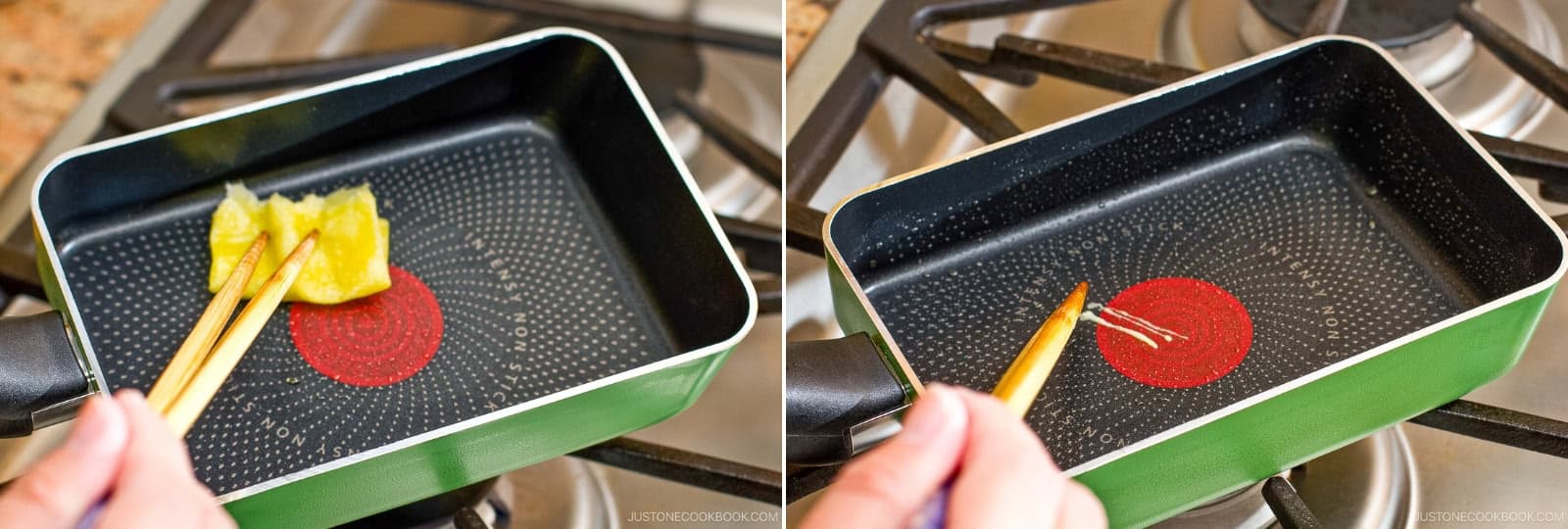
Image detailsHeat the pan over medium heat. Dip a folded paper towel in 2 Tbsp neutral oil and apply a thin layer to the pan. Add a drop of egg mixture — if it sizzles, the pan is ready.Just One Cookbook · Dashimaki Tamago (Japanese Dashi Rolled Omelette) だし巻き玉子Dev reference Inputs and tools1
Uses
- 2 Tbsp neutral oil ((for cooking))
Step 6
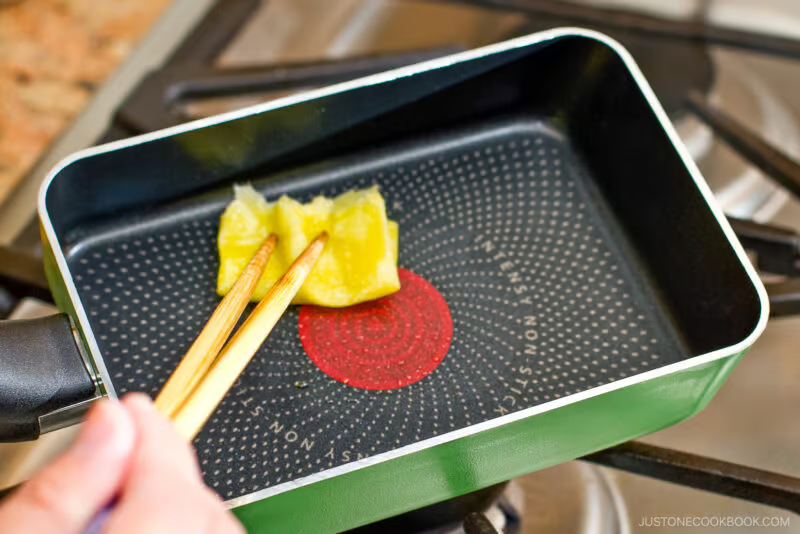
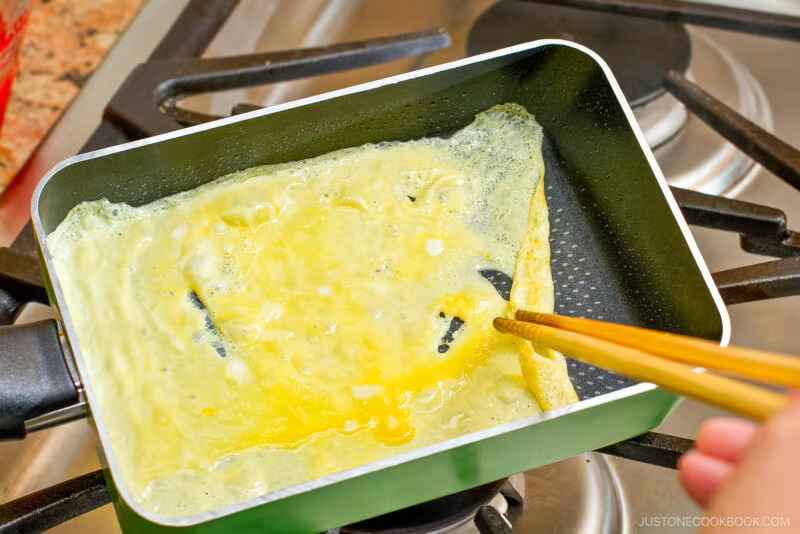
Pour a thin layer of egg into the pan and quickly tilt it so the mixture coats the entire cooking surface. Poke any air bubbles with cooking chopsticks.
Step 7
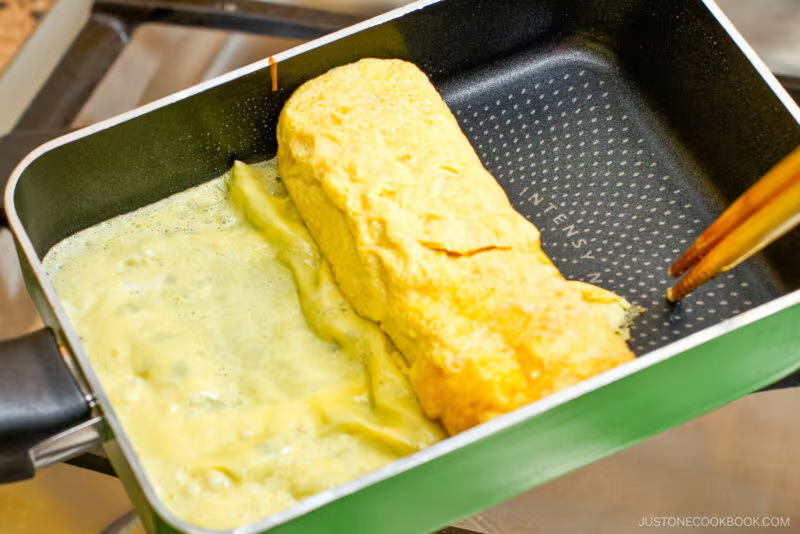
When the bottom is set but the top is still runny, roll the egg into a log shape using chopsticks or a spatula, starting from the far side of the pan toward the handle. Move the rolled omelette to the far side. Apply more oil to the pan with a paper towel, even under the omelette. Nami's Tip: Don't worry about rolling perfectly at this stage, since the inner layers will be hidden inside.
Step 8
Pour the second thin layer of egg, just enough to cover the bottom of the pan. Lift the rolled omelette and tilt the pan to spread the egg mixture underneath. When the new layer of egg has set and is still soft on top, roll it as before from the far side toward the handle. Nami's Tip: Control the cooking temperature by lifting the frying pan rather than adjusting the stove heat. If the heat is too weak, the egg will stick to the frying pan, so be careful.
Step 9
Move the rolled omelette to the far side. Reapply oil on the pan and under the omelette. Pour the next thin layer of egg and tilt to coat the entire surface—including under the omelette.
Step 10
Roll again when the bottom is set and the top is still soft.
Step 11
Repeat until all the egg mixture is used.
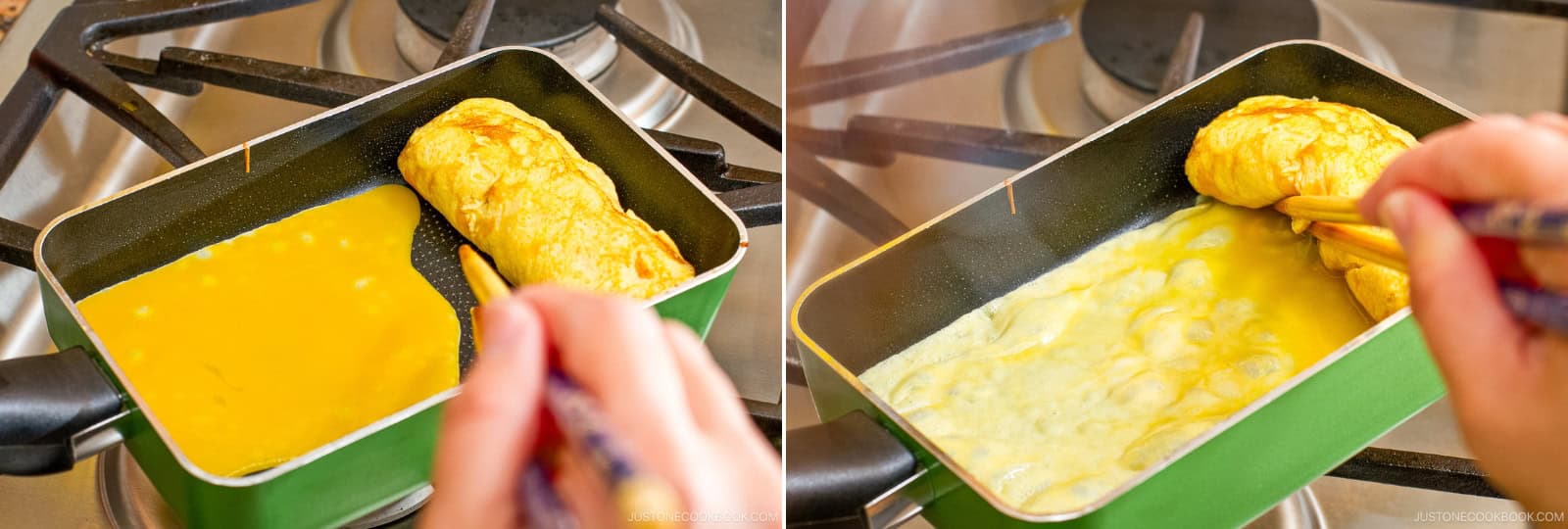
Image detailsRepeat until all the egg mixture is used.Just One Cookbook · Dashimaki Tamago (Japanese Dashi Rolled Omelette) だし巻き玉子Dev reference Visual cue
until all the egg mixture is used.
Checks1
Visual cueInfoVisualuntil all the egg mixture is used.
Expected state: until all the egg mixture is used.
Why and source
This step has reviewed source-backed guidance.
Step 12
On the final round, brown the omelette lightly on each side, if desired.
Step 13
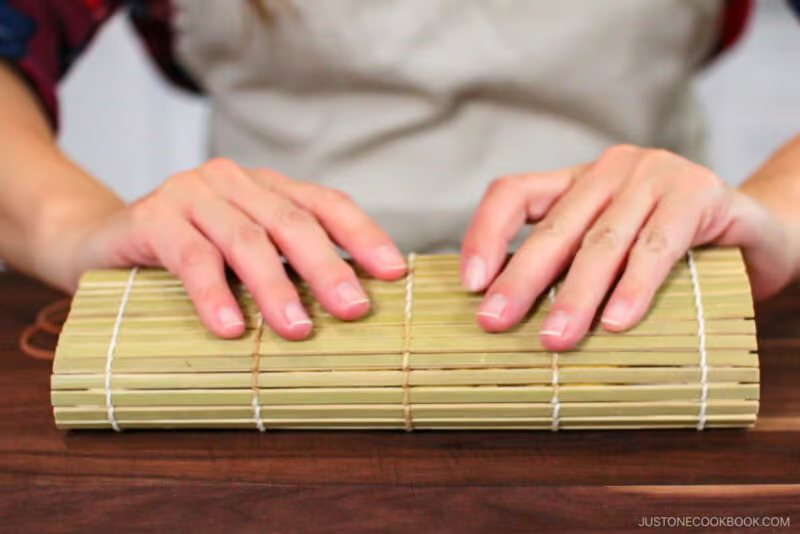
Remove the omelette from the pan. While still hot, place it on a bamboo sushi mat and roll tightly to set the shape. Let stand for 5 minutes. Nami's Tip: Rolling in the bamboo mat is optional but recommended for a neat log shape.
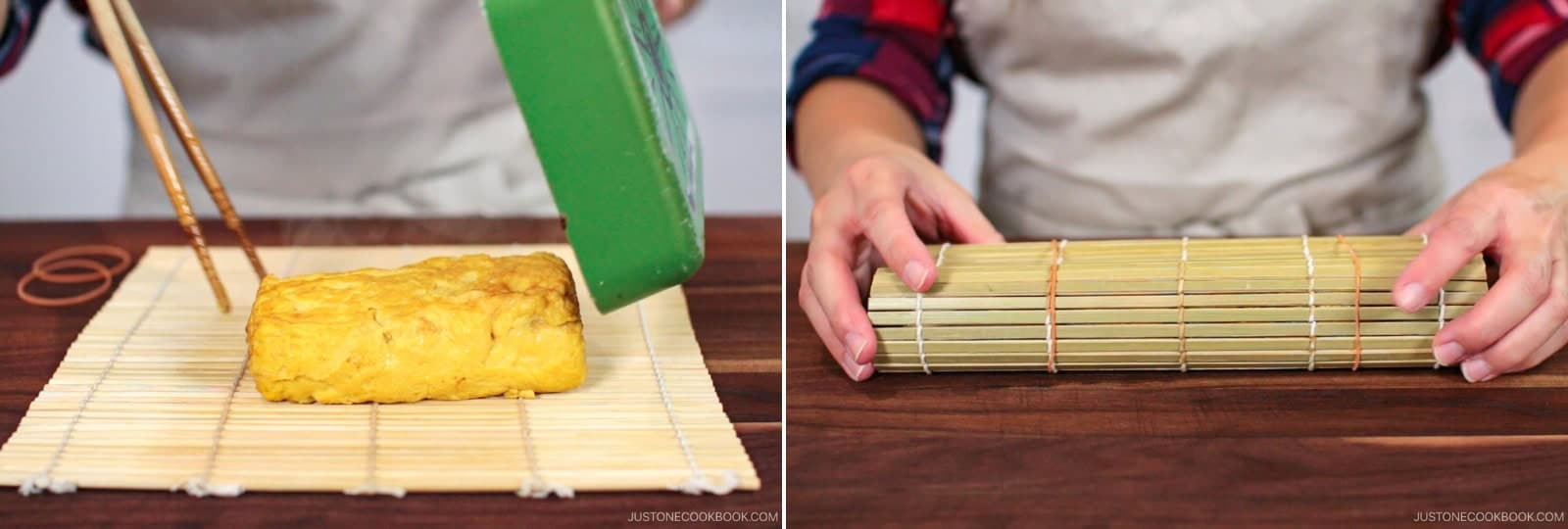
Image detailsRemove the omelette from the pan. While still hot, place it on a bamboo sushi mat and roll tightly to set the shape. Let stand for 5 minutes.Nami's Tip: Rolling in the bamboo mat is optional but recommended for a neat log shape.Just One Cookbook · Dashimaki Tamago (Japanese Dashi Rolled Omelette) だし巻き玉子Dev reference Checks1
TimingInfoTimingfor 5 minutes
Target: 5 minute
Expected state: Let stand for 5 minutes.
Why and source
This step has reviewed source-backed guidance.
Step 14
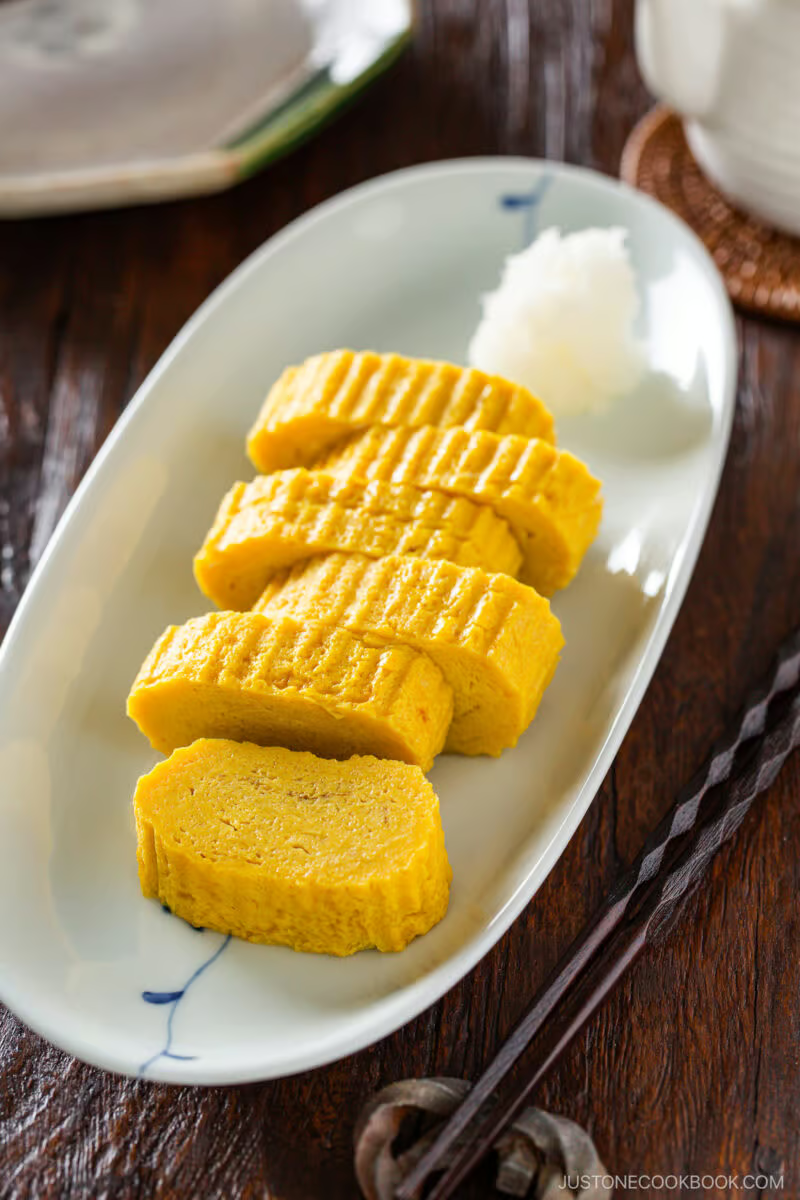
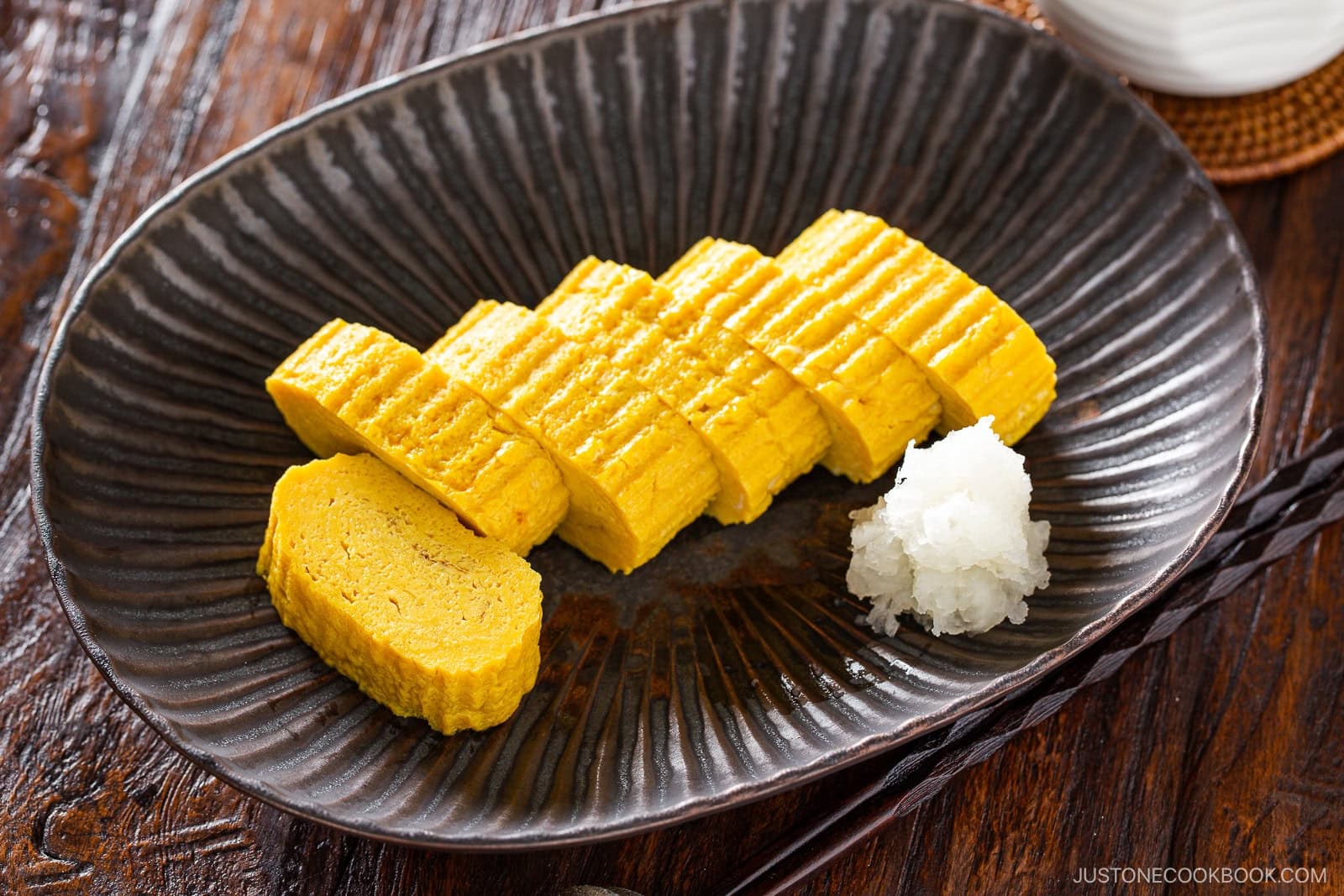
Slice the omelette crosswise into ½-inch (1-cm) pieces. Optionally, serve with a mound of grated daikon and a splash of soy sauce on the side. Nami's Tip: Gently squeeze out any excess water from grated daikon.
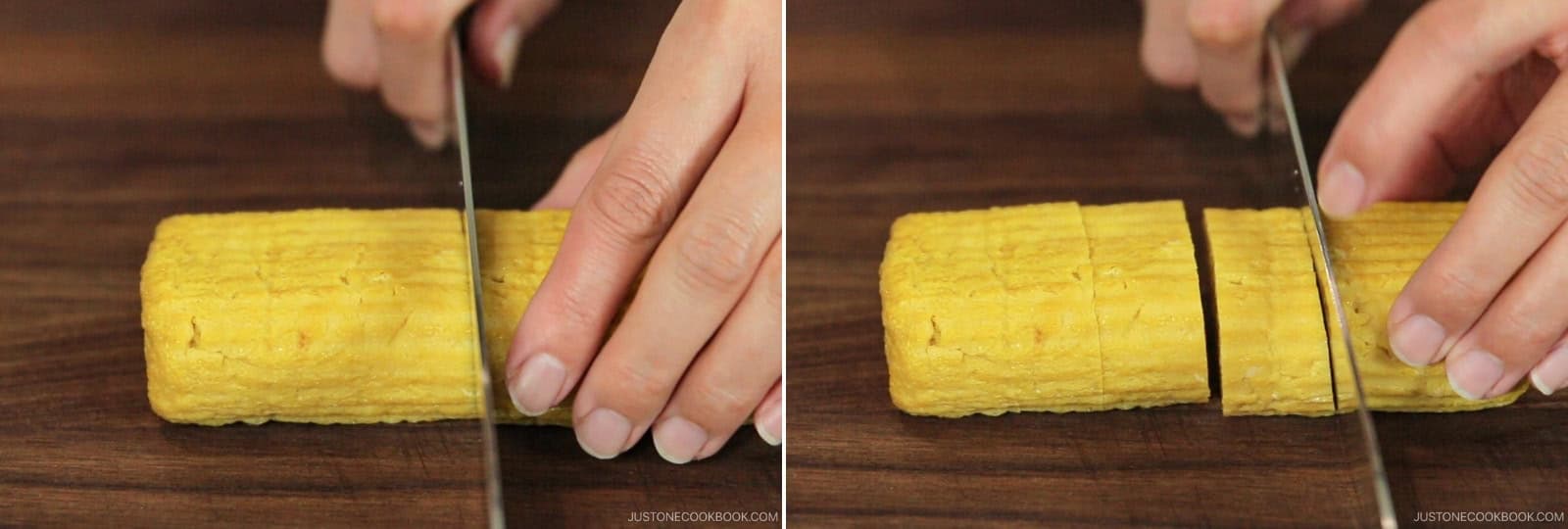
Image detailsSlice the omelette crosswise into ½-inch (1-cm) pieces. Optionally, serve with a mound of grated daikon and a splash of soy sauce on the side.Nami's Tip: Gently squeeze out any excess water from grated daikon.Just One Cookbook · Dashimaki Tamago (Japanese Dashi Rolled Omelette) だし巻き玉子Dev reference Checks1
ServiceMain recipeSource service instruction
Slice the omelette crosswise into ½-inch (1-cm) pieces. Optionally, serve with a mound of grated daikon and a splash of soy sauce on the side. Nami's Tip: Gently squeeze out any excess water from grated daikon.
Why and source
This step has reviewed source-backed guidance.
Step 15
Cool and transfer to an airtight container. Refrigerate for up to 1–2 days or freeze for up to 2 weeks. Thaw overnight in the refrigerator, or reheat directly from frozen in the microwave.
Step 16
If you don't have a rectangular tamagoyaki pan, a round frying pan works too. As you roll, tuck in both rounded edges of the egg layer before each roll to keep the shape straight—or trim the edges with a knife once finished. The roll will be shorter, but just as delicious.
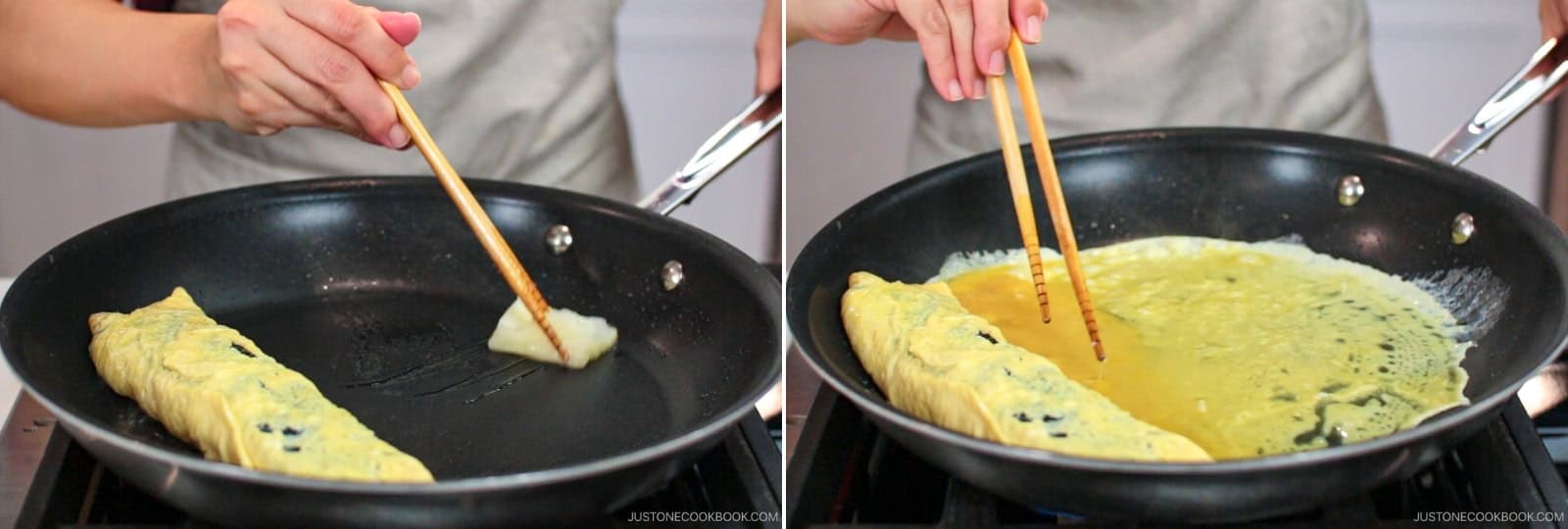
Image detailsIf you don't have a rectangular tamagoyaki pan, a round frying pan works too. As you roll, tuck in both rounded edges of the egg layer before each roll to keep the shape straight—or trim the edges with a knife once finished. The roll will be shorter, but just as delicious.Just One Cookbook · Dashimaki Tamago (Japanese Dashi Rolled Omelette) だし巻き玉子Dev reference Visual cue
once finished.
Checks1
Visual cueInfoVisualonce finished.
Expected state: once finished.
Why and source
This step has reviewed source-backed guidance.
Step 17
If you'd like to add a filling such as a nori sheet, place it on top of the egg layer when the bottom is set and the top is still slightly runny, then roll as usual.
Handling and Storage
Reviewed hold, storage, make-ahead, and service-timing guidance.
Sweet Tamagoyaki (Atsuyaki Tamago)
厚焼き玉子 · Kanto/Tokyo The Kanto-style version — sweeter and firmer with less dashi.
Holds its shape well, making it ideal for bento boxes and meal prep. Dashi Less dashi Flavor Sweeter Texture Firmer, structured Best for Bento, storage GREAT FOR BENTO.
What to Serve with Dashimaki Tamago
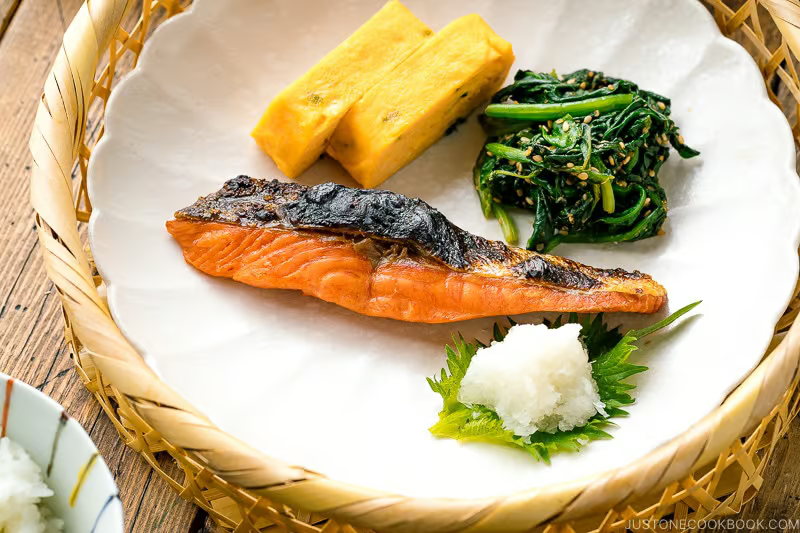
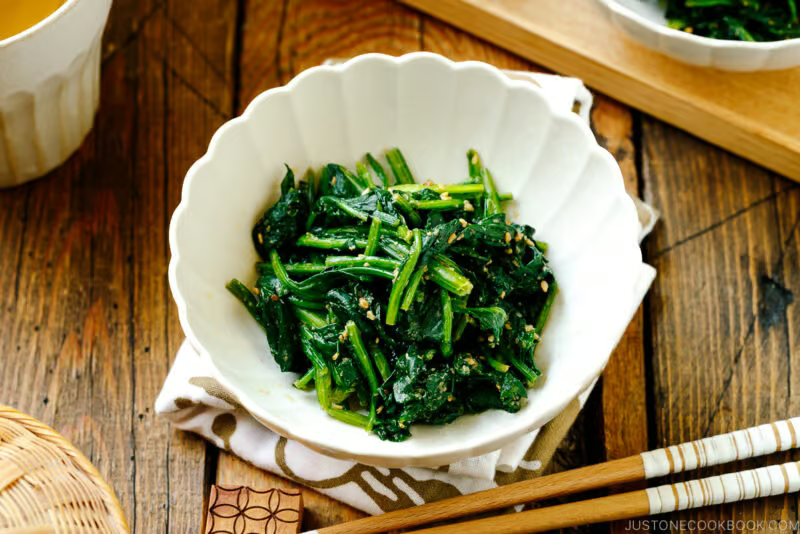
Here are my favorite main and side dishes to pair with this omelette: Japanese Spinach Salad with Sesame Dressing – The fresh and light taste balances the rich egg.
Japanese Salted Salmon – Pairs with the omelette to anchor a classic Japanese breakfast along with miso soup, steamed rice, and pickles. Pickled Cucumbers with Ginger – Crunchy and zesty alongside the soft omelette.
Storage and Reheating Tips
To store: Place leftovers in an airtight container and refrigerate for up to 1–2 days.
The texture will soften faster than other tamagoyaki styles. You can also freeze for up to 2 weeks and thaw overnight in the refrigerator.
Learn More
Extra cooking notes, tests, and source details kept out of the step-by-step method.
Why this works
Quick kitchen reasons behind the main choices.
Dashi Types
Kombu and Bonito Dashi or Vegan Dashi (20 minutes) – Classic homemade dashi; most flavorful option.
Dashi Packet (3 minutes) – Easy and flavorful; my everyday choice! Dashi Powder (3 minutes) – Quick and convenient, but lacks depth.
Variations and Customizations
Looking to change things up?
Try these easy ideas! Skip the dashi for a firmer, easier omelette.
Is dashimaki tamago sweet or savory?
Dashimaki tamago is primarily savory with light sweetness.
Unlike atsuyaki tamago—the Tokyo-style version that leans sweet—dashimaki is defined by its dashi-forward, umami-rich flavor. The large amount of stock gives it a delicate, savory depth that plain tamagoyaki or atsuyaki can’t match.
Do I need a special tamagoyaki pan?
A rectangular tamagoyaki pan creates the neatest shape, but a regular round frying pan works just as well, especially for beginners.
For a thicker omelette, use a 9- or 10-inch nonstick pan.
Article photos
Photos used with the article notes.
Source: Dashimaki Tamago (Japanese Dashi Rolled Omelette) だし巻き玉子
Testing notes
Useful tests and side-by-side notes after the method is clear.
Classic Tamagoyaki (Japanese Rolled Omelette)
プレーン玉子焼き The simplest form — made with little to no dashi, making it the easiest version to roll and a great starting point for beginners.
Dashi Little to none Flavor Neutral / mild Texture Firm, easy to roll Best for Bento & breakfast EASIEST TO MAKE.
What pan do you recommend for tamagoyaki?
If you make tamagoyaki often, a good pan makes a difference.
Over the years I’ve tried many—non-stick, carbon steel, and copper—before landing on my favorite: a cast iron tamagoyaki pan from Iwachu, a 120-year-old Nambu ironware (南部鉄器) maker in Japan. It’s heavy, but it heats evenly and becomes nearly non-stick over time.
Recipe structure
Components and intermediate outputs created by the method.
Main recipe
Recipe card ingredients and steps.
2
Filling
Source step 17 creates or uses filling.
Mixture
Source step 1 creates or uses mixture.
Sauce
Source step 3 creates or uses sauce.
Extra useful notes
Short source-backed recommendations and facts that do not need a step.
Plain and simple. Skip the dashi for a firmer, easier omelette.
Plain and simple. Skip the dashi for a firmer, easier omelette. Try my 3-Ingredient Simple Tamagoyaki.
Sweeter style. Add more sugar to make atsuyaki tamago—a thicker, sweeter version.
Sweeter style. Add more sugar to make atsuyaki tamago—a thicker, sweeter version. See my Japanese Sweet Rolled Omelet recipe.
Add nori. Tuck sheets of nori seaweed between layers before rolling for extra flavor.
Add nori. Tuck sheets of nori seaweed between layers before rolling for extra flavor. I show this in method 2 in the recipe card below.
Make it restaurant style. Add more dashi than I do to make oven-baked castella tamago.
Make it restaurant style. Add more dashi than I do to make oven-baked castella tamago. It’s similar to my Datemaki recipe.
Recipe Utilities
Account actions, source details, export, and reporting stay available without interrupting the cooking flow.
Source and Origin
Origin declaration
Adapted from source
Imported from the just-one-cookbook page for dev review.
Copy risk: Unchecked
Dashimaki Tamago (Japanese Dashi Rolled Omelette) だし巻き玉子
Article
View source
My Kitchen Actions
Login is required.
My Kitchen keeps saved recipes, private notes, adaptations, cooking logs, imports, and exports tied to your account.
Export
Public recipe exports include only approved public content. Personal backup exports require login.
Export history
No exports yet.