Classic Beef Stew
This classic beef stew recipe is a cold-weather one-pot wonder and my favorite for a hearty, comforting, and satisfying meal!
- Total time
- 1 hr 45 min
- Active time
- 15 min
- Yield
- 6, 6 servings
- Difficulty
- Medium
- Equipment
- 1 required
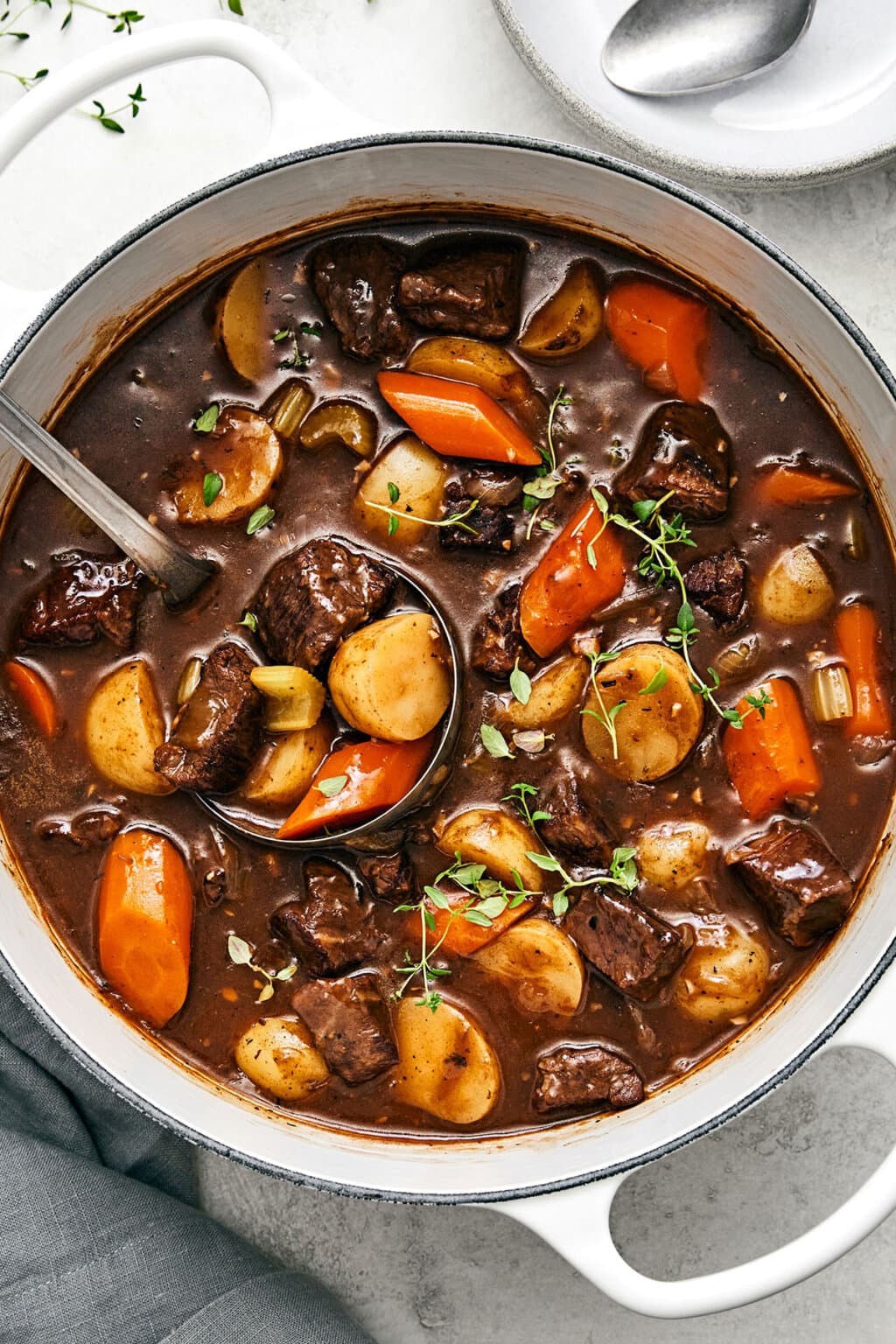
Ingredients and Constraints
Ingredients
- Optional
Ingredient watchpoints4 watchpoints
Short requirements and tradeoffs to check while gathering ingredients; detailed source notes stay expandable.
Garlic
4 garlic cloves (minced)
The source row includes a form, size, temperature, preparation, or handling detail.
Details and source
Source: BEEF STEW
Carrot
4 medium carrots (peeled and sliced on a diagonal)
The source row includes a form, size, temperature, preparation, or handling detail.
Details and source
Source: BEEF STEW
Ribs Celery
3 celery ribs (chopped)
The source row includes a form, size, temperature, preparation, or handling detail.
Details and source
Source: BEEF STEW
Thyme
Optional: fresh thyme for garnish
The source row includes a form, size, temperature, preparation, or handling detail.
Details and source
Source: BEEF STEW
Additional ingredient notes
BEEF STEW INGREDIENTS
Beef Stew Meat: Stew meat is typically beef chuck roast, which is a tender, marbled portion of the upper shoulder and lower neck.
This means you’ll have a good amount of fat to keep the beef chunks juicy and tender as they cook in the pot. Vegetables: This traditional beef stew has all the classics such as yellow onion, white potatoes, carrots, and celery. Flour: A little bit of flour is added to thicken the broth. I’m using arrowroot powder today, but you could use cornstarch or another flour of your choice. Dry Red Wine: To give this stew a bold and rustic flavor, grab a bottle of cabernet sauvignon or pinot noir. But there’s no need to buy an expensive wine, just one you typically like to drink since there will be leftovers! Beef Broth: Use any low-sodium beef broth brand that you like. I’ve linked the one I always buy in the recipe card below. Red Wine Vinegar and Tomato Paste: Essential ingredients to give the broth depth of flavor.
Required setup
Equipment
My favorite pot for stew season!
Before You Cook
Constraints, controls, and warnings to review before starting.
Decisions before cookingDetails1
Reviewed comparisons and tradeoffs that affect the path before the first active step.
What other vegetables can I add?
If you want to switch things up, you can swap the potatoes with turnips or parsnips (they’re a bit lower carb).
Many root vegetables work in this recipe, so have fun with it. Just remember to swap any vegetables with a similar hearty texture so they don’t get overly mushy in the stew.
Method Overview
Structured method notes that are separate from the step timeline.
HOW TO SHOP FOR BEEF STEW MEAT
You’ve got two options here.
One, you can buy packaged beef stew meat that’s already been diced into cubes or head to the butcher section to get fresh-cut pieces (which is what I typically like to do!). Second, you can buy a slab of chuck roast and slice it into cubes yourself.
HOW TO MAKE BEEF STEW
Pat the beef chunks dry with paper towels, then season with a good amount of salt and pepper.
In a large stockpot or Dutch oven, heat the oil over medium-high heat. Working in batches, place the beef in the pot and sear on all sides until golden, 2 to 3 minutes per side, then remove to a plate.
LISA’S TIPS
Don’t crowd the pot when searing the meat.
You want it turn get a really good golden crust before flipping. More seared “gunk” on the bottom of the pot turns into more flavor in the broth!
How can I get that really rich flavor in my beef stew?
My biggest tip is to brown your meat very well before adding the rest of the ingredients (which is how I show you in the recipe below).
Getting a good, golden sear on the meat give it lots of flavor that will seep into the broth as it cooks. It also creates “fond” on the bottom of the pan, which infuses even more flavor into the broth.
How do you make stew meat really tender?
Choosing a chuck roast with a good amount of marbling will naturally give the meat a tender texture.
But make sure to slice across the grain if you’re not buying pre-sliced chunks. Other than that, if you simmer the stew meat for an hour and a half or so, it should naturally become fall-apart tender.
Can you make this beef stew in the slow cooker?
First, sear the meat in a skillet.
Once that’s done, add the cooked meat and vegetables into the slow cooker, and pour all the broth and aromatic ingredients on top (minus the flour). Let this cook on low for about 7 to 8 hours or on high for 4 to 5 hours.
Source video
Source video
Method Timeline
Prep
ActivePrep
15 min
Prep time from the source recipe card.
Cook
ActiveCook
1 hr 30 min
Cook time from the source recipe card.
Total
PassiveTotal
1 hr 45 min
Total time from the source recipe card.
Step 1
Season the beef. Pat the beef dry with paper towels. Season with salt and pepper.

Image detailsSeason beefDownshiftology · BEEF STEWDev reference Inputs and tools2
Uses
- 1 ½ teaspoons kosher salt
- ½ teaspoon freshly ground black pepper
Step 2
Sear the beef. In a large stockpot or Dutch oven, heat the oil over medium-high heat. Working in batches, place the beef in the pot and sear on all sides until golden, 2 to 3 minutes per side, then remove to a plate.
medium-high heat
Image detailsSear beefDownshiftology · BEEF STEWDev reference Visual cue
until golden, 2 to 3 minutes per side, then remove to a plate.
Checks2
Visual cueInfoVisualuntil golden, 2 to 3 minutes per side, then remove to a plate.
Expected state: until golden, 2 to 3 minutes per side, then remove to a plate.
TimingInfoTiming2 to 3 minutes
Target: 2-3 minute
Expected state: Working in batches, place the beef in the pot and sear on all sides until golden, 2 to 3 minutes per side, then remove to a plate.
Inputs and tools1
Uses
- 2 tablespoons extra virgin olive oil
Why and source
This step has reviewed source-backed guidance.
- Source: BEEF STEW
Step 3
Saute the onion. Add the onion and garlic to the pot and pour in the vinegar (which will help to loosen browned bits from the bottom of the pot) and cook for 3 to 4 minutes, until the onion is softened. Add the tomato paste and cook for a minute more.

Image detailsSaute onionDownshiftology · BEEF STEWDev reference Visual cue
until the onion is softened.
Checks2
Visual cueInfoVisualuntil the onion is softened.
Expected state: until the onion is softened.
TimingInfoTimingfor 3 to 4 minutes
Target: 3-4 minute
Expected state: Add the onion and garlic to the pot and pour in the vinegar (which will help to loosen browned bits from the bottom of the pot) and cook for 3 to 4 minutes, until the onion is softened.
Inputs and tools4
Uses
- 1 large yellow onion (cut into chunks)
- 4 garlic cloves (minced)
- 2 tablespoons red wine vinegar
- 1 tablespoon tomato paste
Why and source
This step has reviewed source-backed guidance.
- Source: BEEF STEW
Step 4
Return the beef to the pot. Add the seared beef back to the pot and sprinkle the flour on top. Stir everything together, until the flour is fully dissolved.

Image detailsCook beefDownshiftology · BEEF STEWDev reference Visual cue
until the flour is fully dissolved.
Checks1
Visual cueInfoVisualuntil the flour is fully dissolved.
Expected state: until the flour is fully dissolved.
Why and source
This step has reviewed source-backed guidance.
- Source: BEEF STEW
Step 5
Add the liquids and aromatics. Add the wine, broth, thyme, and bay leaf. Use a large spoon or spatula to stir everything together. Bring the broth to a boil, then reduce the heat to low and simmer partially covered for 1 hour.

Image detailsAdd liquidDownshiftology · BEEF STEWDev reference Checks1
TimingInfoTimingfor 1 hour
Target: 60 minute
Expected state: Bring the broth to a boil, then reduce the heat to low and simmer partially covered for 1 hour.
Inputs and tools4
Uses
- ½ teaspoon dried thyme
- Optional: fresh thyme for garnish
- 1 cup red wine
- 4 cups low-sodium beef broth
Why and source
This step has reviewed source-backed guidance.
- Source: BEEF STEW
Step 6
Add the veggies. Add the potatoes, carrots, and celery. Cook for an additional 20 to 30 minutes, or until the vegetables are fork-tender.

Image detailsAdd veggiesDownshiftology · BEEF STEWDev reference Visual cue
until the vegetables are fork-tender.
Checks2
TextureInfoTextureuntil the vegetables are fork-tender.
Expected state: until the vegetables are fork-tender.
TimingInfoTimingadditional 20 to 30 minutes
Target: 20-30 minute
Expected state: Cook for an additional 20 to 30 minutes, or until the vegetables are fork-tender.
Inputs and tools2
Uses
- 1 pound baby white potatoes (halved or quartered)
- 4 medium carrots (peeled and sliced on a diagonal)
Why and source
This step has reviewed source-backed guidance.
- Source: BEEF STEW
Step 7
Serve. Remove the bay leaves, and if you'd like, garnish with fresh thyme before serving.

Image detailsServeDownshiftology · BEEF STEWDev reference Checks1
ServiceMain recipeSource service instruction
Serve. Remove the bay leaves, and if you'd like, garnish with fresh thyme before serving.
Inputs and tools1
Uses
- 2 bay leaves
Why and source
This step has reviewed source-backed guidance.
- Source: BEEF STEW
Handling and Storage
Reviewed hold, storage, make-ahead, and service-timing guidance.
STORAGE TIPS
To store for the week: Any leftovers can be stored in an airtight container in the fridge for 4 to 5 days.
Keep in mind it might thicken up as it sits in your fridge. Just add a bit more water to thin it down, if needed, when reheating.
Learn More
Extra cooking notes, tests, and source details kept out of the step-by-step method.
Recipe structure
Components and intermediate outputs created by the method.
Main recipe
Recipe card ingredients and steps.
6, 6 servings
Garnish
Source step 7 creates or uses garnish.
Paste
Source step 3 creates or uses paste.
Recipe Utilities
Account actions, source details, export, and reporting stay available without interrupting the cooking flow.
Source and Origin
Origin declaration
Adapted from source
Imported from the downshiftology page for dev review.
Copy risk: Unchecked
BEEF STEW
Article
View source
My Kitchen Actions
Login is required.
My Kitchen keeps saved recipes, private notes, adaptations, cooking logs, imports, and exports tied to your account.
Export
Public recipe exports include only approved public content. Personal backup exports require login.
Export history
No exports yet.