Japanese Chicken Curry
Master authentic Japanese Chicken Curry from scratch. Our foolproof recipe features a homemade roux and secret tips for the most flavorful, rich sauce.
Community Recipes
Public community recipes are kept separate from reviewed starting paths.
Japanese Chicken Curry
Master authentic Japanese Chicken Curry from scratch. Our foolproof recipe features a homemade roux and secret tips for the most flavorful, rich sauce.
How This Dish Works
Mechanics, choices, and evidence-backed explanations.
Japanese curry is a thick curry with a stew-like consistency and commonly includes protein, sweet onions, carrots, and potatoes.
Contextual Substitutions
Dish-specific substitutions with expected changes and cautions.
Swap
Neutral oil to Such As Grapeseed
3 cups (600g) neutral oil, such as grapeseed or canola, divided
Expected change: The source lists this as an alternative in the same ingredient row.
Swap
Neutral oil to Canola
3 cups (600g) neutral oil, such as grapeseed or canola, divided
Expected change: The source lists this as an alternative in the same ingredient row.
Swap
Neutral oil to Divided
3 cups (600g) neutral oil, such as grapeseed or canola, divided
Expected change: The source lists this as an alternative in the same ingredient row.
Swap
Garlic to Thinly Sliced
4 medium cloves garlic, thinly sliced or finely chopped by hand (see note)
Expected change: The source lists this as an alternative in the same ingredient row.
Source: Spaghetti Puttanesca (Spaghetti With Capers, Olives, and Anchovies)
Swap
Garlic to Finely Chopped By Hand
4 medium cloves garlic, thinly sliced or finely chopped by hand (see note)
Expected change: The source lists this as an alternative in the same ingredient row.
Source: Spaghetti Puttanesca (Spaghetti With Capers, Olives, and Anchovies)
Swap
Honey to Maple Syrup
1/2 cup honey (168 grams) or maple syrup (155 grams)
Expected change: The source lists this as an alternative in the same ingredient row.
Source: Healthy Banana Bread!
Swap
Honey to Maple Syrup
½ cup honey or maple syrup
Expected change: The source lists this as an alternative in the same ingredient row.
Source: Easy No-Bake Granola Bars
Swap
Honey to Maple Syrup
1 teaspoon honey or maple syrup
Expected change: The source lists this as an alternative in the same ingredient row.
Source: Arugula and Wild Rice Salad with Zippy Lemon Dressing
Swap
Black Pepper to Cayenne Pepper
Optional spices: freshly ground black pepper, cayenne pepper and/or garlic powder
Expected change: The source lists this as an alternative in the same ingredient row.
Source: Crispy Baked Sweet Potato Fries
Swap
Black Pepper to Garlic Powder
Optional spices: freshly ground black pepper, cayenne pepper and/or garlic powder
Expected change: The source lists this as an alternative in the same ingredient row.
Source: Crispy Baked Sweet Potato Fries
Source and Cultural NotesSources, origin declarations, and evidenced notes for this dish.
What is Japanese Curry?
Japanese curry is a thick curry with a stew-like consistency and commonly includes protein, sweet onions, carrots, and potatoes.
The sauce is thickened by a roux (a mixture of fat and flour and an addition of curry spices). You can find many variations of Japanese curries, ranging from regions to households, but the most basic one uses chicken, which is the recipe I’m sharing here.
What is Japanese Curry? · raw_snapshot.article_sections[0] · Japanese Chicken Curry (Video) チキンカレー
History of Japanese Curry
Curry was introduced to Japan in the late 1800s by the British, and they were initially Western-style stews mixed with curry powder.
The Japanese adapted curry to their own version, and ‘Curry Rice’ (Kare Raisu, カレーライス) was born soon after. By the 1950s, S&B Foods developed a convenient instant mix — known as curry roux — in block form so everyone could make curry rice easily at home.
History of Japanese Curry · raw_snapshot.article_sections[1] · Japanese Chicken Curry (Video) チキンカレー
What Makes Japanese Curry Different from Other Curries
Japanese curry is quite different from most other curries worldwide — it has a thicker consistency, and the taste leans on the sweet and savory side.
The unique sweetness comes from onions, carrots, and other additions like honey and grated apples. The sauce resembles a rich, thick demi-glace layered with spices and earthy flavors.
What Makes Japanese Curry Different from Other Curries · raw_snapshot.article_sections[2] · Japanese Chicken Curry (Video) チキンカレー
Arugula and Wild Rice Salad with Zippy Lemon Dressing
Article
View sourceCrispy Baked Sweet Potato Fries
Article
View sourceEasy No-Bake Granola Bars
Article
View sourceHealthy Banana Bread!
Article
View sourceJapanese Chicken Curry (Video) チキンカレー
Article
View sourceSpaghetti Puttanesca (Spaghetti With Capers, Olives, and Anchovies)
Article
View sourceTraditional Toum (Lebanese Garlic Sauce)
Article
View source
Source declarations
Recipe: Japanese Chicken Curry
Imported from the just-one-cookbook page for dev review.
Arugula and Wild Rice Salad with Zippy Lemon Dressing
Article
View sourceCrispy Baked Sweet Potato Fries
Article
View sourceEasy No-Bake Granola Bars
Article
View sourceHealthy Banana Bread!
Article
View sourceJapanese Chicken Curry (Video) チキンカレー
Article
View sourceSpaghetti Puttanesca (Spaghetti With Capers, Olives, and Anchovies)
Article
View sourceTraditional Toum (Lebanese Garlic Sauce)
Article
View source
Additional EvidenceReviewed claims not already shown in the source notes.
What is Japanese Curry?
Japanese curry is a thick curry with a stew-like consistency and commonly includes protein, sweet onions, carrots, and potatoes.
The sauce is thickened by a roux (a mixture of fat and flour and an addition of curry spices). You can find many variations of Japanese curries, ranging from regions to households, but the most basic one uses chicken, which is the recipe I’m sharing here.
What is Japanese Curry? · raw_snapshot.article_sections[0] · Japanese Chicken Curry (Video) チキンカレー
History of Japanese Curry
Curry was introduced to Japan in the late 1800s by the British, and they were initially Western-style stews mixed with curry powder.
The Japanese adapted curry to their own version, and ‘Curry Rice’ (Kare Raisu, カレーライス) was born soon after. By the 1950s, S&B Foods developed a convenient instant mix — known as curry roux — in block form so everyone could make curry rice easily at home.
History of Japanese Curry · raw_snapshot.article_sections[1] · Japanese Chicken Curry (Video) チキンカレー
What Makes Japanese Curry Different from Other Curries
Japanese curry is quite different from most other curries worldwide — it has a thicker consistency, and the taste leans on the sweet and savory side.
The unique sweetness comes from onions, carrots, and other additions like honey and grated apples. The sauce resembles a rich, thick demi-glace layered with spices and earthy flavors.
What Makes Japanese Curry Different from Other Curries · raw_snapshot.article_sections[2] · Japanese Chicken Curry (Video) チキンカレー
Arugula and Wild Rice Salad with Zippy Lemon Dressing
Article
View sourceCrispy Baked Sweet Potato Fries
Article
View sourceEasy No-Bake Granola Bars
Article
View sourceHealthy Banana Bread!
Article
View sourceJapanese Chicken Curry (Video) チキンカレー
Article
View sourceSpaghetti Puttanesca (Spaghetti With Capers, Olives, and Anchovies)
Article
View sourceTraditional Toum (Lebanese Garlic Sauce)
Article
View source
CompareOpen side-by-side comparisons from reviewed recipe and variant targets.
Media GroupsReviewed media groups that support dish-level explanation or evidence.
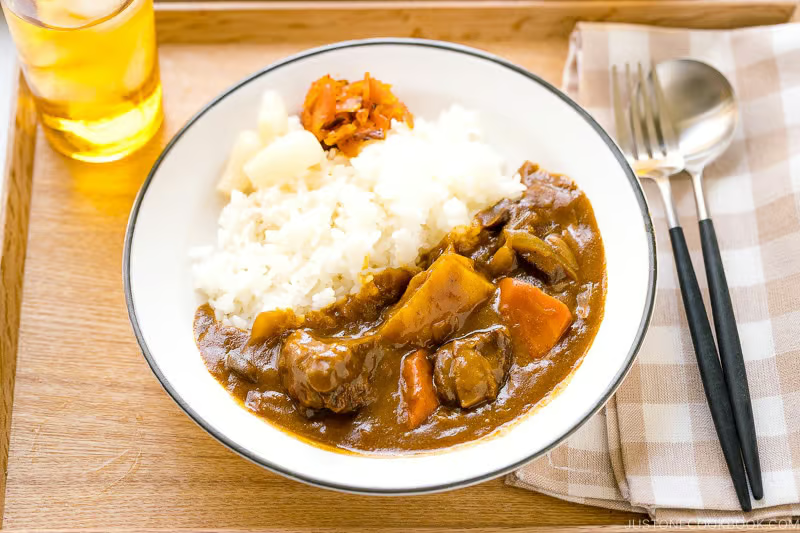
Dish photo
Primary photo from the source page.
Source: Japanese Chicken Curry (Video) チキンカレー
Community ContributionAdd source-backed improvements without changing canonical content directly.
Improve this dish page
Add a source note, tested variation, correction, or community recipe without changing canonical content directly.
Report ContentReport a source, safety, attribution, or quality issue for review.
Login is required.
Use an account to access this workflow.