Basmati Rice Recipe, How to Cook Basmati Rice
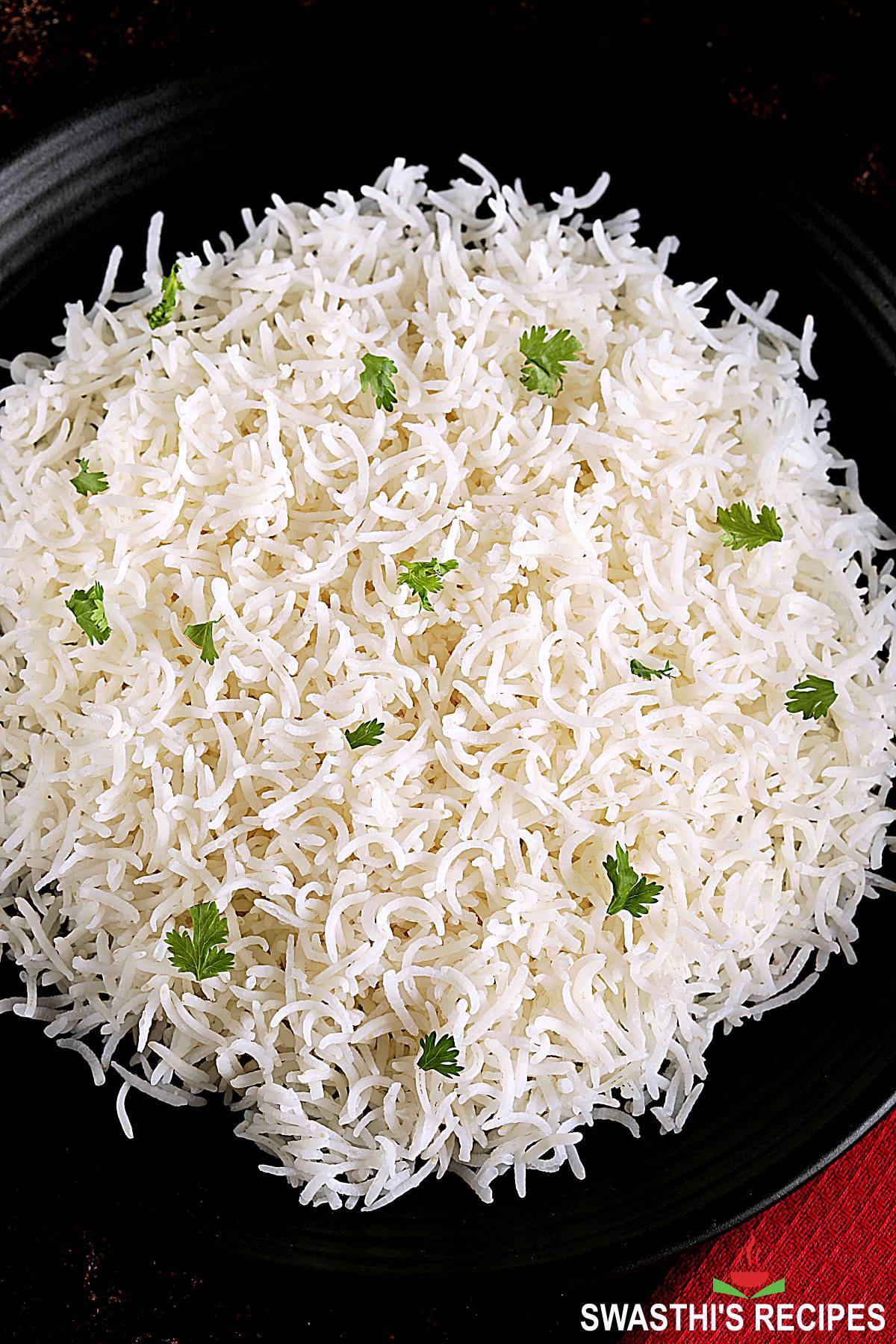
Learn to cook basmati rice in pot or cooker for a meal or biryani the right way. With the help of step by step photos ..
- Total time
- 20 min
- Active time
- 1 min
- Yield
- 2
- Difficulty
- Medium
Ingredients and Constraints
Ingredients
- Optional
- Optional
Ingredient watchpoints2 watchpoints
Short requirements and tradeoffs to check while gathering ingredients; detailed source notes stay expandable.
Oil
½ teaspoon oil (or ghee (optional))
The source row includes a form, size, temperature, preparation, or handling detail.
Details and source
Salt
¼ to ½ teaspoon salt ((optional))
The source row includes a form, size, temperature, preparation, or handling detail.
Details and source
Additional ingredient notes
About Basmati Rice
Cooking basmati rice correctly is very crucial to making good biryani or to enjoy it with your favorite curry.
The texture, aroma and taste of basmati rice or a Biryani largely depends on the quality of basmati rice used. Choosing good quality basmati rice is essential if you want to enjoy aromatic and fluffy grains that are separate and not mushy. Aged basmati rice is the best choice! High quality basmati rice is aged, meaning it was harvested at least a year ago and was stored properly to let the grains age naturally. Like wine, it gets better at aroma and texture as it ages. So high quality basmati is pricey when compared to the newly harvested grains. Using good quality basmati is not enough, but it has to be cooked right to get the correct texture & retain the flavor. The techniques explained in this post are time-tested and have never failed me in my 2 decades of cooking experience.
Before You Cook
Constraints, controls, and warnings to review before starting.
Decisions before cookingDetails1
Reviewed comparisons and tradeoffs that affect the path before the first active step.
Drain Method
Always choose premium quality basmati rice that is aged and has been stored in good condition.
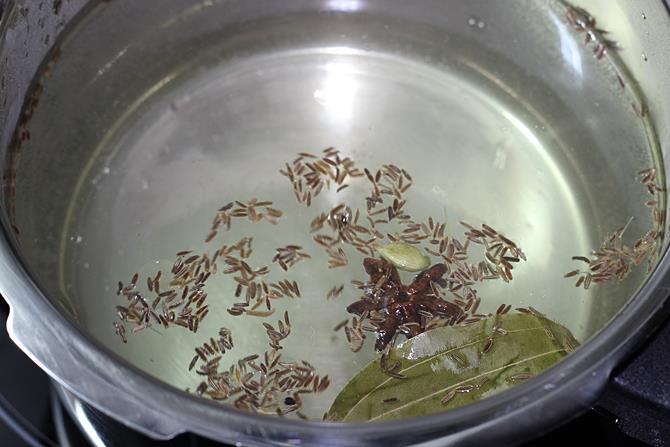
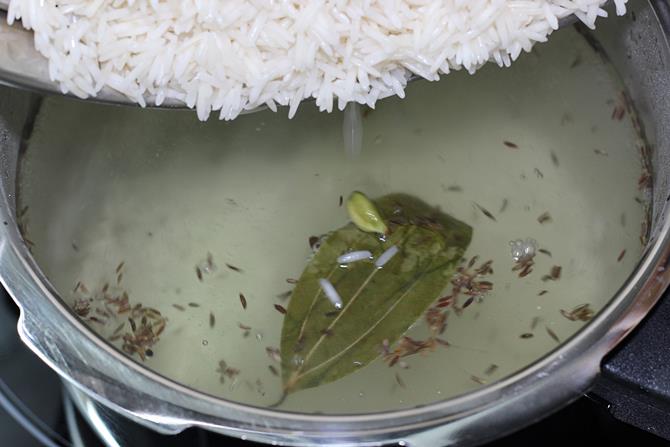
Wash it well a few times in ample amount of water. Soak for at least 30 to 40 minutes again in apmple amount of water depending on the kind and brand. Some kinds of rice need about 60 minutes plus for the grain to absorb water. This helps the grain to expand well while cooking. Bring water to a boil in a large pot. Usually for 1 cup rice, any where from 4 cups to 5 cups can be used. If you are not using premium quality rice, you should be using up to 5 cups water to get rid of starch completely. Taste the water, it has to be slightly salty. Add in the spices along with 1 tsp to 1 tbsp oil again depending on the quality of rice.
Show 1 more media item
Method Overview
Structured method notes that are separate from the step timeline.
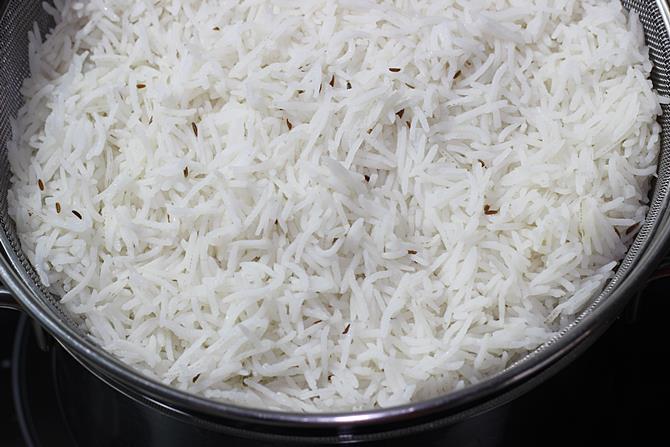
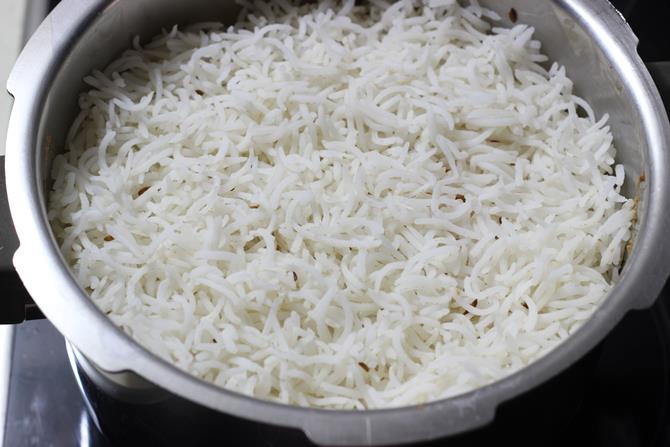
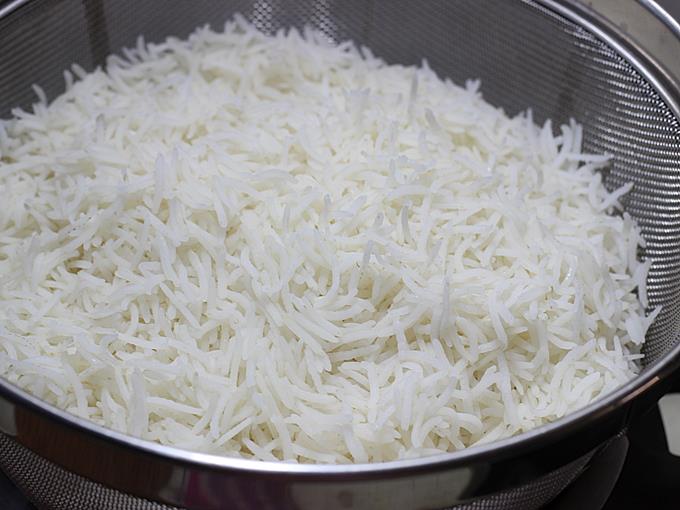
When to drain basmati rice
When to drain the rice depends on what kind of biriyani you are making.
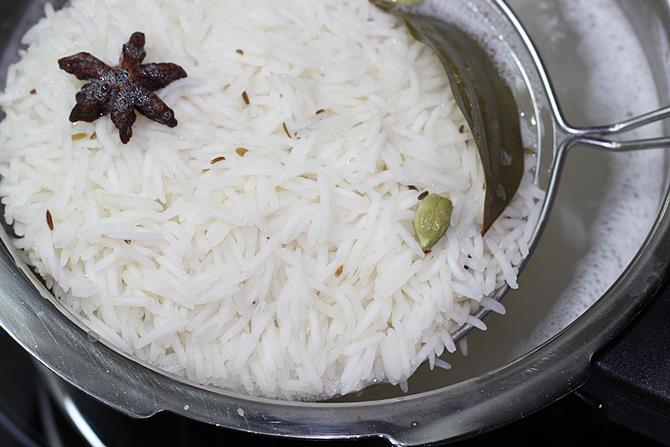
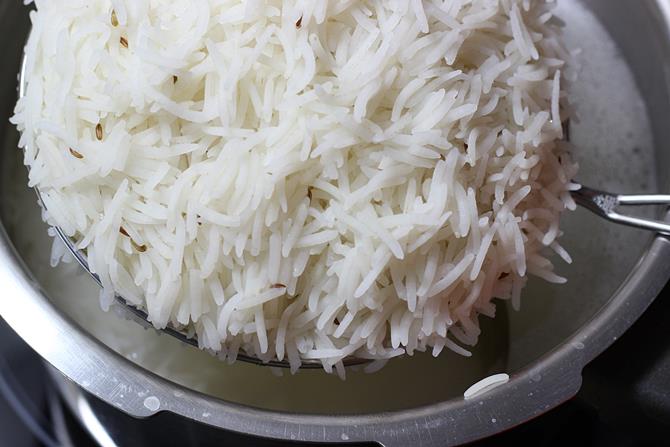
If making kacchi mutton biriyani, basmati rice has to be half cooked i.e 50% to 60%. The rice expands completely by then, but has to be cooked further which is done during the dum process. Usually yakhni or rice cooked water is also added in small quantity to generate the steam since mutton takes longer time to cook. If making kacchi chicken biryani, your rice has to be under cooked or 75% cooked and not al dente. Since the marinade for kacchi biryani has more moisture than the pakki biryani, it has to be under cooked. 25% will be cooked when the meat is dum cooked due to dum released during the process. But how do you identify 75% cooked basmati rice? When you bite into the rice, you will feel the slight rawness in the rice.
Cooking basmati rice for layered biryani
If making pakki biryani – veg biryani, chicken biryani, mutton biryani – Basmati rice has to be 90% cooked i.e cooked to al dente.
The rice doesn’t get cooked much in this kind of biriyani since it is dum cooked for short time. Basmati rice turns slightly tender due to the short period of dum/steam. If making only layered biryani – like egg, prawns or fish biriyani – rice has to be cooked to 90 to 100% based on the moisture and the time taken for dum cooking. Rice must be grainy but not mushy. In this kind of biriyani, the dum process does not release any moisture but instead only infuses the flavors.
Method Timeline
Prep
ActivePrep
1 min
Prep time from the source recipe card.
Cook
ActiveCook
19 min
Cook time from the source recipe card.
Total
PassiveTotal
20 min
Total time from the source recipe card.
Step 1
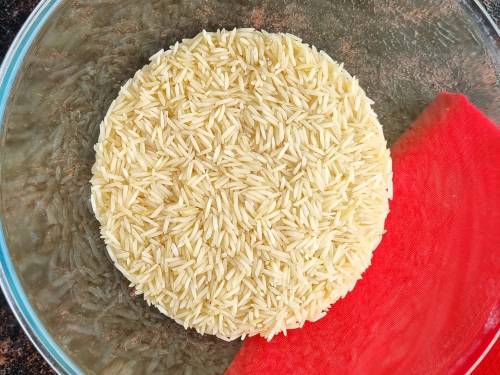
Add 1 cup basmati rice to a bowl and rinse well thrice. During the first rinse, you will see the water is cloudy and white due to the excess starch.
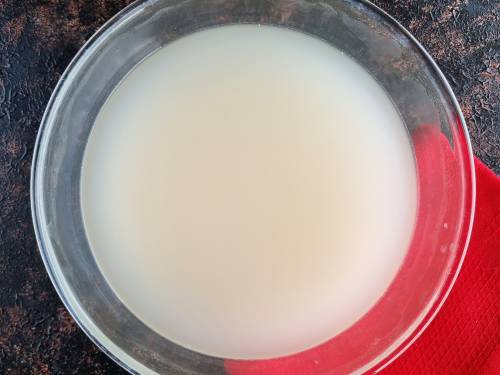
Image detailsrinsed basmati riceSwasthis Recipes · Basmati Rice Recipe, How to Cook Basmati RiceDev reference Inputs and tools2
Uses
- 1 cup aged basmati rice
- 2 cups water (reduce by ½ cup if using new rice)
Step 2
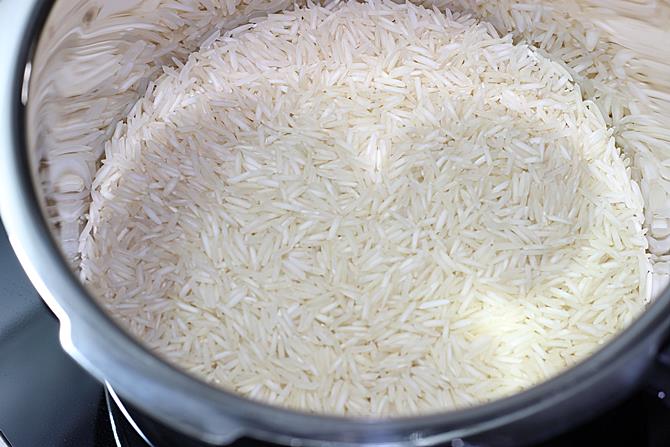
Drain the water and pour fresh water. The water looks clearer at this stage. Soak the rice for a minimum of 15 minutes. If you are using newly harvested rice, do not soak.
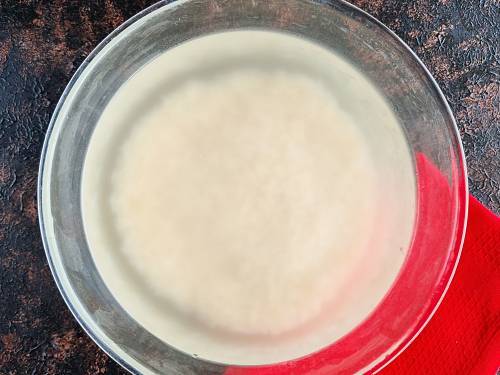
Image detailssoaked basmati riceSwasthis Recipes · Basmati Rice Recipe, How to Cook Basmati RiceDev reference Checks1
TimingInfoTiming15 minutes
Target: 15 minute
Expected state: Soak the rice for a minimum of 15 minutes.
Why and source
This step has reviewed source-backed guidance.
Step 3
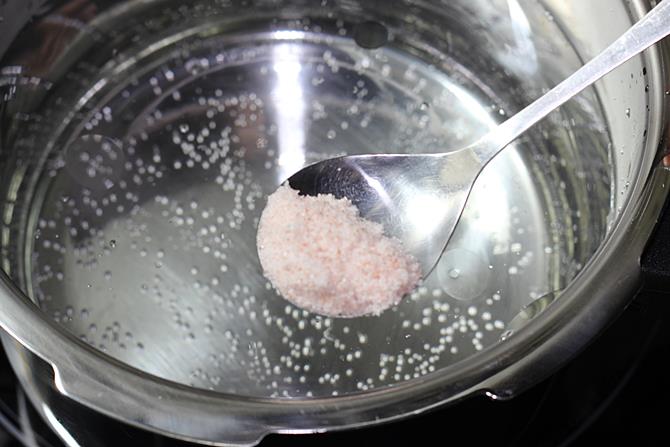
Pour water to a heavy bottom pot. If you want to add salt, whole spices, oil or ghee, you may add at this stage. For aged basmati rice use 2 cups water and for newly harvested rice start with 1½ cups water.
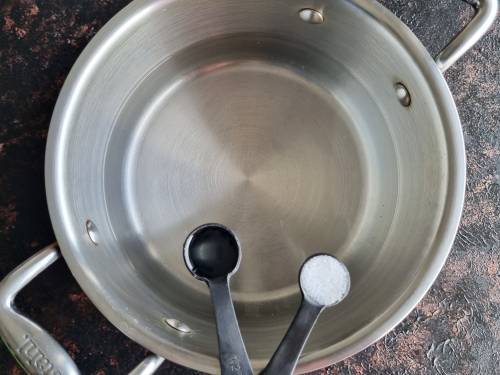
Image detailssalt and oil in waterSwasthis Recipes · Basmati Rice Recipe, How to Cook Basmati RiceDev reference Inputs and tools2
Uses
- ½ teaspoon oil (or ghee (optional))
- ¼ to ½ teaspoon salt ((optional))
Step 4
After 15 mins, drain to a colander/strainer and shake off gently to get rid of the excess water.
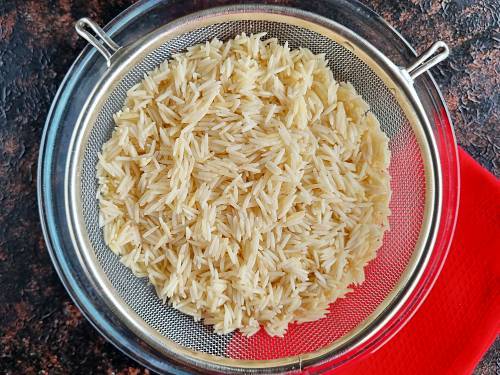
Image detailsAbsorption MethodSwasthis Recipes · Basmati Rice Recipe, How to Cook Basmati RiceDev reference Checks1
TimingInfoTiming15 mins
Target: 15 minute
Expected state: After 15 mins, drain to a colander/strainer and shake off gently to get rid of the excess water.
Why and source
This step has reviewed source-backed guidance.
Step 5
Bring the water to a rolling boil on a high heat.
high heatStep 6
Add the drained rice and spread it with a little spoon.
Step 7
Increase the heat to high, to keep the rice boiling rapidly.
Step 8
Reduce the heat to low and cook covered until the rice is al dente, slightly undercooked. This step should take you no longer than 10 to 11 minutes. Do not stir or mix at all during this stage of cooking. If you see the rice bubbling and frothing up, you may open the lid one to 2 times & cover back.
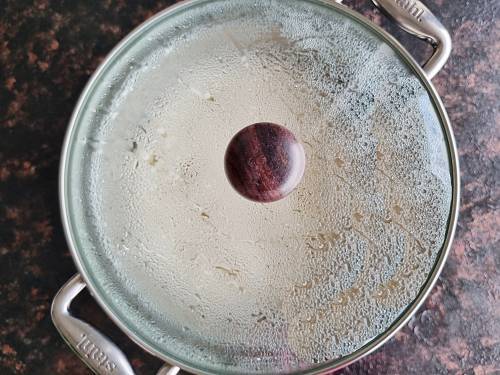
Image detailsAbsorption MethodSwasthis Recipes · Basmati Rice Recipe, How to Cook Basmati RiceDev reference Visual cue
until the rice is al dente, slightly undercooked.
Checks2
Visual cueInfoVisualuntil the rice is al dente, slightly undercooked.
Expected state: until the rice is al dente, slightly undercooked.
TimingInfoTiming10 to 11 minutes
Target: 10-11 minute
Expected state: This step should take you no longer than 10 to 11 minutes.
Why and source
This step has reviewed source-backed guidance.
Step 9
When the rice is almost cooked al dente, you will see little holes and the water is fully absorbed. If you find your rice, is undercooked and there is not enough water, add a few tbsps of hot water.
Step 10
At this stage, check by inserting a rice paddle straight into the pot, from a side towards the bottom & look down. Ideally there should be no excess water at the bottom. (read troubleshooting tips below). Optionally, using the paddle, turn the rice from the bottom to the top only once to get the top layer rice down and bottom wet rice to the top. Level the rice on top. Do not over do this as the grains can break.
Step 11
Cover the pot & turn off the stove. Let rest on the hot burner for 10 to 15 mins. Basmati rice will still be steaming in the residual heat. This helps the rice to turn fluffy and will cook completely.
Step 12
After resting, each grain should look like biryani rice grains – long, fluffy, non-sticky and not broken. Use a rice paddle to serve the basmati rice with Dal tadka, Chickpea Curry, Butter Chicken or Tikka masala. Troubleshooting Tip: If you use the correct amount of water you won’t be left with any excess water when the rice is al dente. But if you find little excess water, simply increase the heat to medium high and cook without lid for a few minutes to evaporate the water. The other way is to drain the rice to a colander placed inside the sink or over a large bowl. Add the rice back to the hot pot & cover it. Photo Guide
Learn More
Extra cooking notes, tests, and source details kept out of the step-by-step method.
Recipe structure
Components and intermediate outputs created by the method.
Main recipe
Recipe card ingredients and steps.
2
Recipe Utilities
Account actions, source details, export, and reporting stay available without interrupting the cooking flow.
Source and Origin
Origin declaration
Adapted from source
Imported from the swasthis-recipes page for dev review.
Copy risk: Unchecked
Basmati Rice Recipe, How to Cook Basmati Rice
Article
View source
My Kitchen Actions
Login is required.
My Kitchen keeps saved recipes, private notes, adaptations, cooking logs, imports, and exports tied to your account.
Export
Public recipe exports include only approved public content. Personal backup exports require login.
Export history
No exports yet.