Sweet Red Bean Paste)—tsubuan Koshian
Make homemade anko (sweet red bean paste) with just 3 ingredients—azuki, sugar, and salt. Choose silky koshian or chunky tsubuan for your Japanese sweets.
Community Recipes
Public community recipes are kept separate from reviewed starting paths.
Anko (Sweet Red Bean Paste)—Tsubuan & Koshian
Make homemade anko (sweet red bean paste) with just 3 ingredients—azuki, sugar, and salt. Choose silky koshian or chunky tsubuan for your Japanese sweets.
How This Dish Works
Mechanics, choices, and evidence-backed explanations.
Anko (餡子) or an (餡) is Japan’s classic sweet red bean paste, simmered from azuki (adzuki) beans and sugar until thick and glossy.
Contextual Substitutions
Dish-specific substitutions with expected changes and cautions.
Swap
Water to Milk
5 cups (1.2L) water, milk, or chicken stock or vegetable stock (see note)
Expected change: The source lists this as an alternative in the same ingredient row.
Source: Smooth and Creamy Polenta
Swap
Water to Chicken Stock
5 cups (1.2L) water, milk, or chicken stock or vegetable stock (see note)
Expected change: The source lists this as an alternative in the same ingredient row.
Source: Smooth and Creamy Polenta
Swap
Water to Vegetable Stock
5 cups (1.2L) water, milk, or chicken stock or vegetable stock (see note)
Expected change: The source lists this as an alternative in the same ingredient row.
Source: Smooth and Creamy Polenta
Swap
Water to Broth
1 ½ cup water or broth
Expected change: The source lists this as an alternative in the same ingredient row.
Swap
Water to Milk
water or milk, for brushing
Expected change: The source lists this as an alternative in the same ingredient row.
Source: Fresh Apple Cinnamon Scones
Source and Cultural NotesSources, origin declarations, and evidenced notes for this dish.
What is Anko?
Anko (餡子) or an (餡) is Japan’s classic sweet red bean paste, simmered from azuki (adzuki) beans and sugar until thick and glossy.
There are two beloved textures: rustic and chunky tsubuan (粒あん) and fine and smooth koshian (こしあん). You’ll taste anko in dessert soups, sweet dumplings, sweet mochi rice cakes, even Japanese shaved ice.
What is Anko? · raw_snapshot.article_sections[0] · Anko (Sweet Red Bean Paste) Recipe – Tsubuan & Koshian 餡子
Anko (Sweet Red Bean Paste) Recipe – Tsubuan & Koshian 餡子
Article
View sourceCILANTRO LIME RICE (CHIPOTLE COPYCAT)
Article
View sourceFresh Apple Cinnamon Scones
Article
View sourceSmooth and Creamy Polenta
Article
View source
Source declarations
Recipe: Anko (Sweet Red Bean Paste)—Tsubuan & Koshian
Imported from the just-one-cookbook page for dev review.
Source: Anko (Sweet Red Bean Paste) Recipe – Tsubuan & Koshian 餡子
Anko (Sweet Red Bean Paste) Recipe – Tsubuan & Koshian 餡子
Article
View sourceCILANTRO LIME RICE (CHIPOTLE COPYCAT)
Article
View sourceFresh Apple Cinnamon Scones
Article
View sourceSmooth and Creamy Polenta
Article
View source
Additional EvidenceReviewed claims not already shown in the source notes.
What is Anko?
Anko (餡子) or an (餡) is Japan’s classic sweet red bean paste, simmered from azuki (adzuki) beans and sugar until thick and glossy.
There are two beloved textures: rustic and chunky tsubuan (粒あん) and fine and smooth koshian (こしあん). You’ll taste anko in dessert soups, sweet dumplings, sweet mochi rice cakes, even Japanese shaved ice.
What is Anko? · raw_snapshot.article_sections[0] · Anko (Sweet Red Bean Paste) Recipe – Tsubuan & Koshian 餡子
Anko (Sweet Red Bean Paste) Recipe – Tsubuan & Koshian 餡子
Article
View sourceCILANTRO LIME RICE (CHIPOTLE COPYCAT)
Article
View sourceFresh Apple Cinnamon Scones
Article
View sourceSmooth and Creamy Polenta
Article
View source
CompareOpen side-by-side comparisons from reviewed recipe and variant targets.
Media GroupsReviewed media groups that support dish-level explanation or evidence.
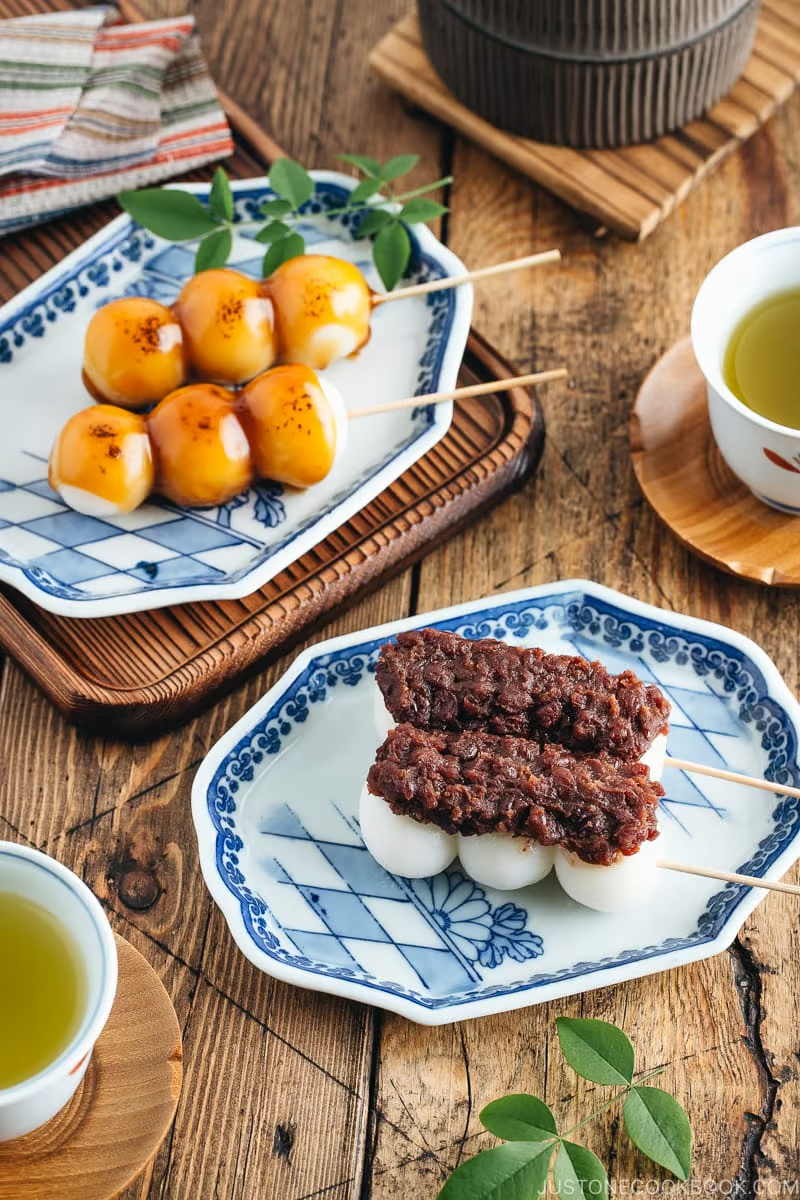
Dish photo
Primary photo from the source page.
Source: Anko (Sweet Red Bean Paste) Recipe – Tsubuan & Koshian 餡子
Community ContributionAdd source-backed improvements without changing canonical content directly.
Improve this dish page
Add a source note, tested variation, correction, or community recipe without changing canonical content directly.
Report ContentReport a source, safety, attribution, or quality issue for review.
Login is required.
Use an account to access this workflow.